When it comes to choosing a diet for weight loss and better health, two popular approaches often come up: the Mediterranean diet and the ketogenic (keto) diet. Both have passionate followers, and both can help people improve their eating habits—but they work in very different ways.
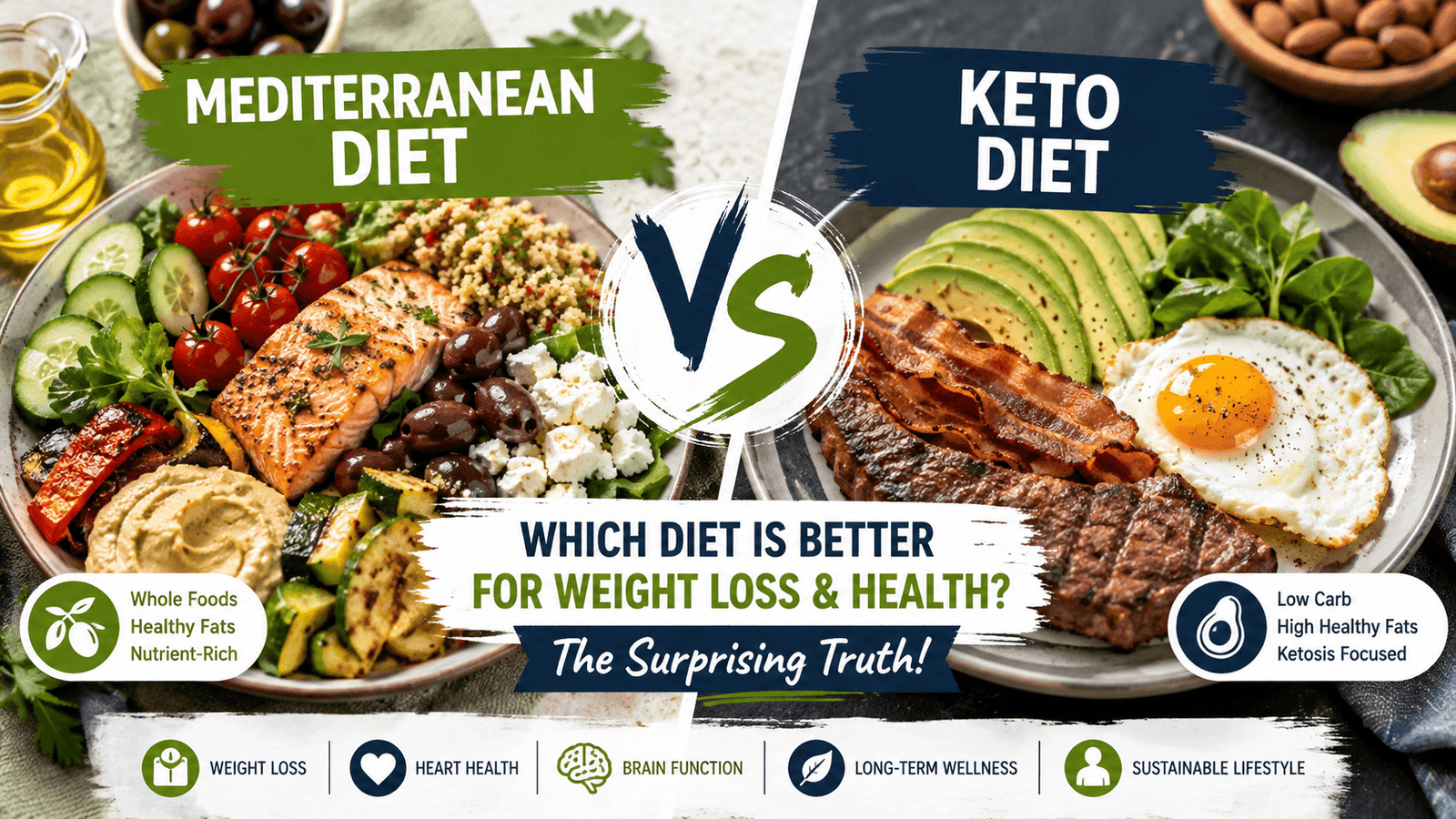
So, when comparing Mediterranean diet vs keto, which one is actually better for weight loss and overall health?
The surprising truth is that there isn’t one perfect diet for everyone. Keto may produce faster initial weight loss for some people, while the Mediterranean diet may be easier to maintain long term. Your goals, food preferences, lifestyle, and ability to stick with the plan all matter.
Let’s break down the key differences so you can decide which approach may fit you best.
What Is the Mediterranean Diet?
The Mediterranean diet is based on the traditional eating patterns of countries surrounding the Mediterranean Sea.
Instead of focusing on strict calorie counting or eliminating an entire macronutrient, this diet emphasizes whole, minimally processed foods and healthy fats.
Typical Mediterranean diet foods include:
- Vegetables and leafy greens
- Fresh fruits
- Whole grains
- Beans and lentils
- Nuts and seeds
- Extra-virgin olive oil
- Fish and seafood
- Moderate amounts of poultry, eggs, and dairy
- Herbs and spices
Red meat, highly processed foods, added sugars, and refined carbohydrates are generally eaten less frequently.
One of the biggest advantages of the Mediterranean approach is variety. You can create flavorful meals using vegetables, olive oil, herbs, seafood, nuts, legumes, and whole grains without following an extremely restrictive food list.
What Is the Keto Diet?
The ketogenic diet takes a very different approach.
Keto is a very low-carbohydrate, high-fat diet designed to shift the body into a metabolic state called ketosis. During ketosis, the body relies more heavily on fat and ketones for energy instead of primarily using glucose from carbohydrates.
A typical keto eating pattern focuses on foods such as:
- Eggs
- Meat and poultry
- Fish and seafood
- Avocados
- Olive oil
- Butter and certain dairy products
- Nuts and seeds
- Low-carb vegetables
- Cheese
Foods that are high in carbohydrates—such as bread, pasta, rice, sugary foods, many grains, and most starchy vegetables—are significantly restricted.
Because carbohydrate intake is kept very low, keto can require more planning than the Mediterranean diet.
Mediterranean Diet vs Keto: What’s the Biggest Difference?
The biggest difference is how each diet approaches carbohydrates and food choices.
The Mediterranean diet doesn’t necessarily require you to eliminate carbohydrates. Instead, it generally emphasizes higher-quality carbohydrate sources such as vegetables, legumes, fruits, and whole grains.
Keto, on the other hand, severely restricts carbohydrates to encourage ketosis.
Here’s a quick comparison:
| Feature | Mediterranean Diet | Keto Diet |
|---|---|---|
| Main focus | Whole foods & healthy fats | Very low carbs & high fat |
| Carbohydrates | Moderate | Very low |
| Protein | Moderate | Moderate to high |
| Fat | Mainly healthy fats | High fat |
| Fruits | Generally encouraged | Limited, especially higher-carb fruits |
| Whole grains | Common | Usually avoided |
| Legumes | Common | Usually restricted |
| Sugar | Limited | Highly restricted |
| Processed foods | Limited | Depends on food choices |
| Ketosis | Not the goal | Main metabolic goal |
The two diets can overlap in some areas. For example, both can encourage vegetables, fish, nuts, seeds, and healthy fats.
Which Diet Is Better for Weight Loss?
This is one of the biggest questions people have when comparing Mediterranean diet vs keto.
Keto can lead to noticeable weight loss, especially during the early stages. One reason is that drastically reducing carbohydrates can cause the body to use stored glycogen and release associated water. This can result in a rapid drop on the scale initially.
Keto may also help some people reduce appetite because meals are often high in protein and fat.
However, long-term weight loss depends heavily on maintaining a calorie deficit and being able to consistently follow the diet.
The Mediterranean diet can also support weight loss when it emphasizes appropriate portions and minimally processed foods. Its combination of vegetables, fiber-rich foods, protein, and healthy fats can make meals satisfying without being excessively calorie-dense.
The bottom line: Keto may offer faster initial scale changes for some people, while the Mediterranean diet may be easier for many people to maintain over the long term.
Which Diet Is Better for Heart Health?
The Mediterranean diet has a particularly strong reputation for cardiovascular health.
It emphasizes foods such as olive oil, nuts, fish, vegetables, fruits, and whole grains while limiting many highly processed foods. This overall pattern provides a wide range of nutrients and unsaturated fats.
Keto can also be designed around healthy fats, fish, avocados, nuts, seeds, and non-starchy vegetables. However, simply following a high-fat diet doesn’t automatically make it heart healthy.
A keto diet that relies heavily on processed meats, excessive saturated fat, butter, and highly processed foods may look very different from a well-formulated keto diet based on whole foods.
For people with specific cholesterol or cardiovascular concerns, it’s important to discuss major dietary changes with a qualified healthcare professional.
Which Diet Is Easier to Follow?
For many people, the Mediterranean diet wins when it comes to flexibility.
You can enjoy a broad selection of foods, including fruit, legumes, whole grains, and occasional treats, while still following the overall dietary pattern.
Keto can be more challenging because carbohydrate intake must remain very low. Even foods that are generally considered healthy—such as bananas, potatoes, beans, and many grains—may not fit easily into a strict keto plan.
Eating at restaurants or attending social events can also be more complicated on keto.
That doesn’t mean keto is impossible to maintain. People who enjoy low-carb foods and prefer clear dietary boundaries may actually find keto easier to follow.
The best diet is often the one you can realistically follow consistently.
Mediterranean Diet vs Keto: What About Blood Sugar?
Both dietary patterns can affect blood sugar, but they do so differently.
Keto dramatically reduces carbohydrate intake, which can reduce the amount of glucose entering the bloodstream from food and may improve blood sugar control for some people.
The Mediterranean diet takes a different approach. Rather than eliminating carbohydrates, it emphasizes higher-quality sources and foods rich in fiber, such as vegetables, legumes, fruits, and whole grains.
For people with diabetes or those taking glucose-lowering medication, significant dietary changes can affect blood sugar and medication needs. Medical guidance is especially important in these situations.
Can You Combine Keto and Mediterranean Eating?
Interestingly, you don’t necessarily have to choose one approach completely.
A Mediterranean-style keto diet can combine some of the principles of both eating patterns.
For example, you could prioritize:
- Extra-virgin olive oil
- Avocados
- Fatty fish
- Eggs
- Nuts and seeds
- Leafy greens
- Broccoli and cauliflower
- Zucchini
- Olives
- Herbs and spices
while keeping carbohydrates low enough to fit your keto goals.
This approach can help you focus on the quality of your food rather than simply eating large amounts of processed low-carb products.
Mediterranean Diet vs Keto: Pros and Cons
Mediterranean Diet Pros
- Wide variety of foods
- Rich in vegetables and fiber
- Includes healthy fats
- Flexible and social-friendly
- Emphasizes minimally processed foods
- Generally easier to maintain long term
Mediterranean Diet Cons
- Weight loss may be slower for some people
- Requires attention to portions
- Some traditional Mediterranean foods are relatively high in carbohydrates
- Results can vary depending on overall calorie intake
Keto Pros
- Can produce rapid initial weight loss
- Very clear food guidelines
- May help reduce appetite for some people
- Can improve blood sugar control in certain individuals
- Encourages low-carb vegetables and healthy fats when well planned
Keto Cons
- Highly restrictive carbohydrate intake
- Can be difficult socially
- Requires careful meal planning
- Some people experience temporary side effects when starting
- Not every high-fat keto food is automatically healthy
So, Which Diet Should You Choose?
If your primary goal is rapid carbohydrate reduction and you’re comfortable following a restrictive eating pattern, keto may be worth considering.
If you want a flexible, balanced eating pattern focused on whole foods and long-term sustainability, the Mediterranean diet may be a better fit.
For some people, the ideal solution may even be a combination of the two—using Mediterranean principles to improve the quality of a lower-carb or keto diet.
Ultimately, diet consistency matters enormously. A diet that looks perfect on paper won’t produce meaningful long-term results if you can’t enjoy it or maintain it.
Final Verdict: Mediterranean Diet vs Keto
So, who wins the battle of Mediterranean diet vs keto?
The answer depends on what you’re looking for.
Keto may have an advantage for people who prefer very low-carb eating and want to focus specifically on ketosis and carbohydrate restriction.
The Mediterranean diet may have an advantage for people looking for flexibility, variety, and a sustainable whole-food eating pattern.
Instead of asking which diet is universally “better,” ask which approach fits your goals, food preferences, lifestyle, and long-term habits.
And remember: healthy eating isn’t just about choosing a diet with a catchy name. The quality of the foods you eat, your portions, activity level, sleep, and consistency all play important roles in your overall health.
If you’re considering a strict keto diet or making major dietary changes—especially if you have a medical condition or take medication—talk with a qualified healthcare professional before getting started.
Frequently Asked Questions
Is keto better than the Mediterranean diet for weight loss?
Keto can lead to rapid initial weight loss for some people, partly because of changes in water and glycogen. However, long-term weight loss depends largely on maintaining an appropriate calorie deficit and following a sustainable eating pattern.
Can you eat fruit on keto?
Some lower-carbohydrate fruits, such as berries, can fit into many keto plans in controlled portions. Higher-carbohydrate fruits generally don’t fit well within a strict ketogenic diet.
Is the Mediterranean diet low carb?
The Mediterranean diet isn’t inherently low carb. It can include fruits, legumes, and whole grains. However, you can adapt Mediterranean-style eating to create a lower-carbohydrate approach.
Can I combine the Mediterranean diet and keto?
Yes. Some people follow a Mediterranean-style low-carb or keto diet that emphasizes foods such as olive oil, fish, avocados, nuts, seeds, and non-starchy vegetables while limiting carbohydrates.
Which diet is easier to maintain?
For many people, the Mediterranean diet is easier to maintain because it allows a wider variety of foods. However, individual preferences differ, and some people prefer the clear rules of keto.
Disclaimer: This article is for educational and informational purposes only and is not medical advice. Consult a qualified healthcare professional before making significant dietary changes, particularly if you have a health condition or take medication.