If you’ve ever wondered where ketone bodies are metabolized, you’re asking an important question about how the ketogenic diet actually works. Ketones are more than just a popular term in the keto community—they are an alternative source of energy produced when your body has limited access to glucose.
During ketosis, your body changes the way it obtains and uses energy. Instead of relying primarily on carbohydrates and glucose, it begins using more fat for fuel. The liver plays a central role in producing ketone bodies, but where do those ketones go after they are created?
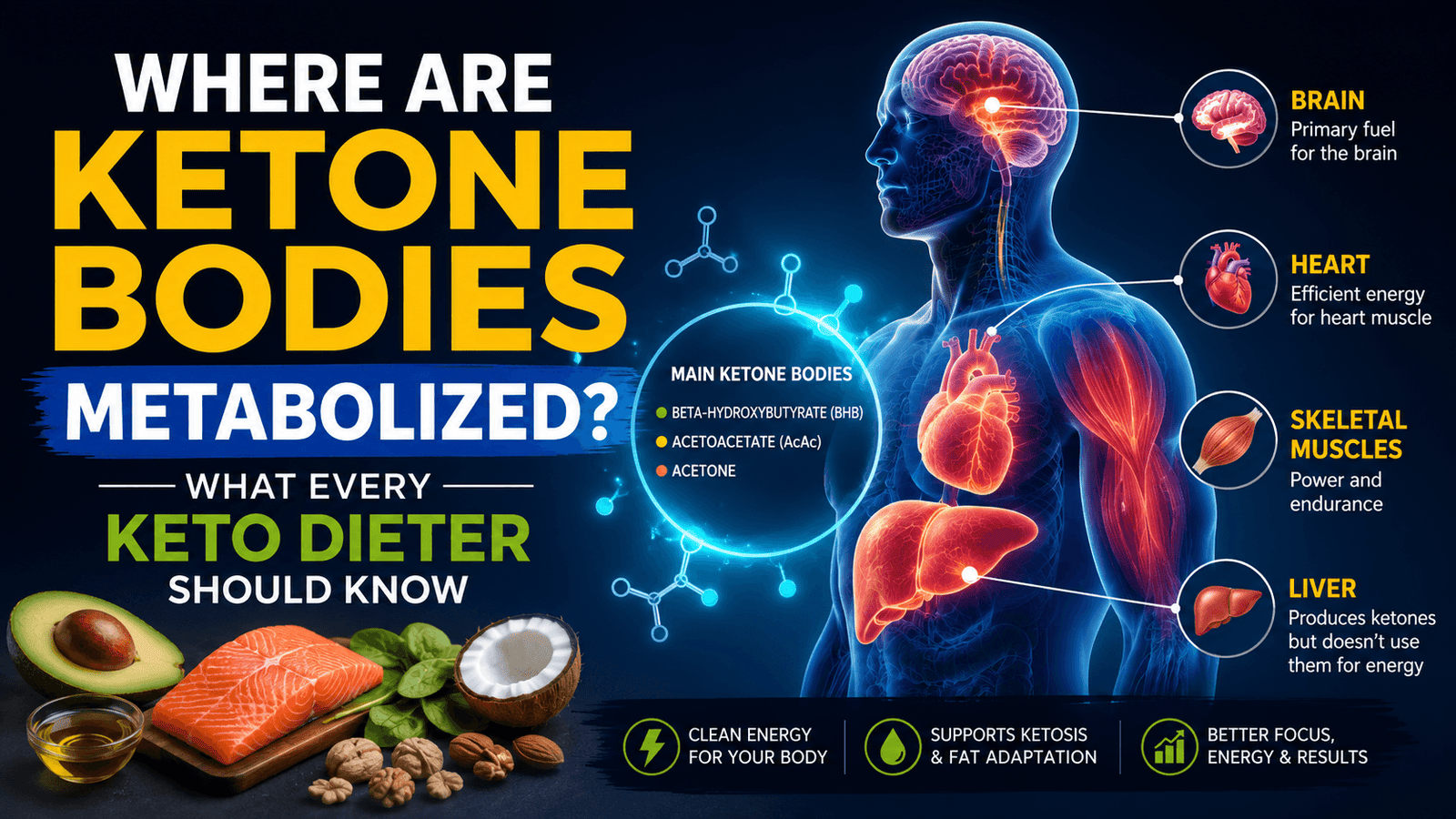
The answer involves several organs and tissues, especially the brain, heart, skeletal muscles, and kidneys. Understanding this process can help explain why ketosis is associated with changes in energy metabolism and why ketone bodies are so important during periods of low carbohydrate availability.
Let’s take a closer look at where ketone bodies are produced, where they are metabolized, and how your body uses them for energy.
What Are Ketone Bodies?
Ketone bodies are water-soluble molecules produced when the body breaks down fatty acids for energy, particularly when carbohydrate availability is low.
The three main ketone bodies are:
- Acetoacetate (AcAc)
- Beta-hydroxybutyrate (BHB)
- Acetone
Although all three are commonly referred to as ketones, they have different roles in metabolism. Beta-hydroxybutyrate and acetoacetate are the primary ketone bodies used as energy sources, while acetone is largely considered a byproduct that is eliminated through respiration.
Ketone production increases when insulin levels are relatively low and fatty acid availability is higher. This can occur during fasting, prolonged exercise, carbohydrate restriction, or a ketogenic diet.
Where Are Ketone Bodies Produced?
Before answering where are ketone bodies metabolized, it is important to understand where they are made.
Ketone bodies are primarily produced in the liver, specifically inside the mitochondria of liver cells.
When carbohydrate intake is low, insulin levels decrease and the body increases the release of stored fat. Fatty acids travel to the liver, where they undergo a process called beta-oxidation.
Beta-oxidation produces acetyl-CoA. When enough acetyl-CoA is available and the normal pathways for processing it are limited by the metabolic state, the liver converts some of it into ketone bodies through a process called ketogenesis.
The newly produced ketones can then enter the bloodstream and travel to tissues throughout the body.
Interestingly, although the liver produces ketone bodies, it cannot efficiently use them as a major energy source itself because it lacks sufficient activity of an enzyme required for ketone utilization.
This means the liver essentially acts as a ketone-producing organ, supplying fuel to other tissues.
Where Are Ketone Bodies Metabolized?
So, where are ketone bodies metabolized?
Ketone bodies are mainly metabolized in tissues that contain mitochondria and have the necessary enzymes to convert ketones into usable energy.
Major sites of ketone utilization include:
1. Brain
The brain is one of the most important tissues that uses ketone bodies.
Under normal conditions, the brain relies heavily on glucose for energy. However, during prolonged fasting or carbohydrate restriction, ketones become an increasingly important fuel source.
Beta-hydroxybutyrate and acetoacetate can cross the blood-brain barrier and enter brain cells. Inside these cells, they are converted through several metabolic steps into acetyl-CoA, which can then enter the citric acid cycle (TCA cycle) to help generate ATP.
This ability to use ketones is particularly important when glucose availability is reduced.
2. Skeletal Muscles
Skeletal muscles can also metabolize ketone bodies, especially during periods of fasting or carbohydrate restriction.
Muscle cells can take up circulating ketones and convert them into acetyl-CoA. The acetyl-CoA then enters the TCA cycle, where it contributes to energy production.
During the early stages of fasting or nutritional ketosis, muscles may use ketones relatively readily. As fasting continues, the brain gradually increases its use of ketones, helping conserve glucose and reducing the body’s need to produce glucose from protein.

3. Heart
The heart is another major tissue capable of using ketone bodies as fuel.
Cardiac muscle has a high and continuous energy demand. Because the heart has abundant mitochondria and strong oxidative capacity, it can efficiently use several fuel sources, including fatty acids, glucose, lactate, and ketone bodies.
During conditions in which circulating ketones are elevated, the heart can increase its utilization of ketones.
4. Kidneys
The kidneys can also utilize ketone bodies for energy.
The kidneys play several important roles in metabolism and contribute to the body’s overall handling of ketones. Renal tissues can oxidize ketones and use the resulting acetyl-CoA to produce energy.
The kidneys are also involved in maintaining acid-base balance and handling certain metabolic products, making them an important part of the body’s response to prolonged carbohydrate restriction.
How Does the Body Turn Ketones Into Energy?
Now that we know where ketone bodies are metabolized, let’s look at what actually happens inside cells.
The process can be simplified into several steps.
First, beta-hydroxybutyrate is converted back into acetoacetate. Acetoacetate is then converted into acetoacetyl-CoA.
Next, acetoacetyl-CoA is converted into two molecules of acetyl-CoA.
The acetyl-CoA then enters the citric acid cycle, also known as the Krebs cycle or TCA cycle.
Through the TCA cycle and subsequent oxidative phosphorylation, the cell generates ATP, the primary energy currency used by cells.
In simple terms:
Fat → Fatty acids → Liver → Ketone bodies → Bloodstream → Tissues → Acetyl-CoA → ATP
This metabolic pathway allows the body to obtain energy from fat-derived ketones when carbohydrate availability is relatively low.
Why Does the Body Make Ketones?
The production of ketones is essentially an adaptation to reduced carbohydrate availability.
When dietary carbohydrates are restricted, glucose availability decreases. The body still needs a reliable source of energy, particularly for organs with substantial energy requirements.
Fat stores provide a large source of energy. However, fatty acids themselves cannot fully replace glucose as a fuel for certain tissues because of differences in how they cross cellular barriers and are metabolized.
Ketone bodies solve part of this problem.
Because ketones are water-soluble and can circulate through the bloodstream, they can transport energy derived from fat to tissues that can use them.
This is one reason ketogenesis becomes more important during prolonged fasting and ketogenic diets.
Ketosis vs. Ketoacidosis: What’s the Difference?
A common misconception is that nutritional ketosis and diabetic ketoacidosis are the same thing. They are not.
Nutritional ketosis is a normal metabolic state that can occur when carbohydrate intake is significantly reduced. In this state, ketone levels generally remain within a controlled physiological range.
Diabetic ketoacidosis (DKA) is a serious medical emergency most commonly associated with insufficient insulin in people with diabetes. It can cause dangerously high blood glucose and ketone levels along with metabolic acidosis.
Therefore, simply having ketones in the bloodstream does not automatically mean something is wrong. The context and ketone concentration matter.
People with diabetes, particularly those using insulin or certain glucose-lowering medications, should discuss ketogenic diets with a qualified healthcare professional before making major dietary changes.
What Happens to Ketones That Aren’t Used?
Not every ketone body produced by the liver is immediately oxidized for energy.
Some ketones can be converted between different forms, while excess ketones can leave the body through urine or breath.
Acetone, for example, is volatile and can be exhaled through the lungs. This is partly responsible for the distinctive breath odor that some people notice during ketosis.
The kidneys can also excrete ketone bodies in the urine, particularly when blood ketone levels become elevated.
The body therefore has several ways to regulate and eliminate ketone bodies depending on its metabolic needs.
Why Ketone Metabolism Matters on a Keto Diet
For people following a ketogenic diet, understanding ketone metabolism provides a clearer picture of what happens when carbohydrate intake is reduced.
A typical ketogenic diet emphasizes foods that are relatively low in carbohydrates while providing adequate fat and protein. As carbohydrate availability falls, the body can increase fatty acid oxidation and ketone production.
However, simply eating fat does not automatically mean that the body is producing large amounts of ketones. Ketone production depends on the overall metabolic state, including carbohydrate availability, insulin signaling, energy requirements, and individual factors.
The goal of a ketogenic diet should therefore not simply be to maximize ketone levels. Nutritional needs, food quality, adequate protein, hydration, and overall dietary balance are also important.
Frequently Asked Questions
Are ketone bodies made in the liver?
Yes. Ketone bodies are primarily produced in the mitochondria of liver cells through a process called ketogenesis.
Where are ketone bodies metabolized?
Ketone bodies are mainly metabolized in tissues such as the brain, heart, skeletal muscles, and kidneys. These tissues convert ketones into acetyl-CoA, which can enter the TCA cycle to support ATP production.
Can the brain use ketones for energy?
Yes. During prolonged fasting or carbohydrate restriction, the brain can significantly increase its use of ketone bodies as an alternative energy source.
Does the liver use the ketones it produces?
The liver produces ketone bodies but has limited ability to use them itself because it lacks sufficient activity of the enzyme needed for ketone utilization.
Are ketones always harmful?
No. Ketone bodies are normal metabolic fuels. They are naturally produced during fasting and carbohydrate restriction. However, very high ketone levels in certain medical conditions can contribute to ketoacidosis, which requires urgent medical attention.
Final Thoughts
So, where are ketone bodies metabolized? Mainly in tissues such as the brain, heart, skeletal muscles, and kidneys.
The liver produces ketone bodies from fatty acids, releases them into the bloodstream, and allows other tissues to use them as an alternative energy source. Once inside these tissues, ketones are converted into acetyl-CoA, which enters the citric acid cycle and ultimately helps generate ATP.
For anyone following a ketogenic diet, understanding this process can make ketosis much easier to understand. Ketones are not simply a byproduct of eating fewer carbohydrates they are an important part of the body’s sophisticated system for adapting to changes in fuel availability.
As with any restrictive diet, individual needs can vary. If you have a medical condition or take medications that affect blood glucose or metabolism, consult a qualified healthcare professional before making significant dietary changes.