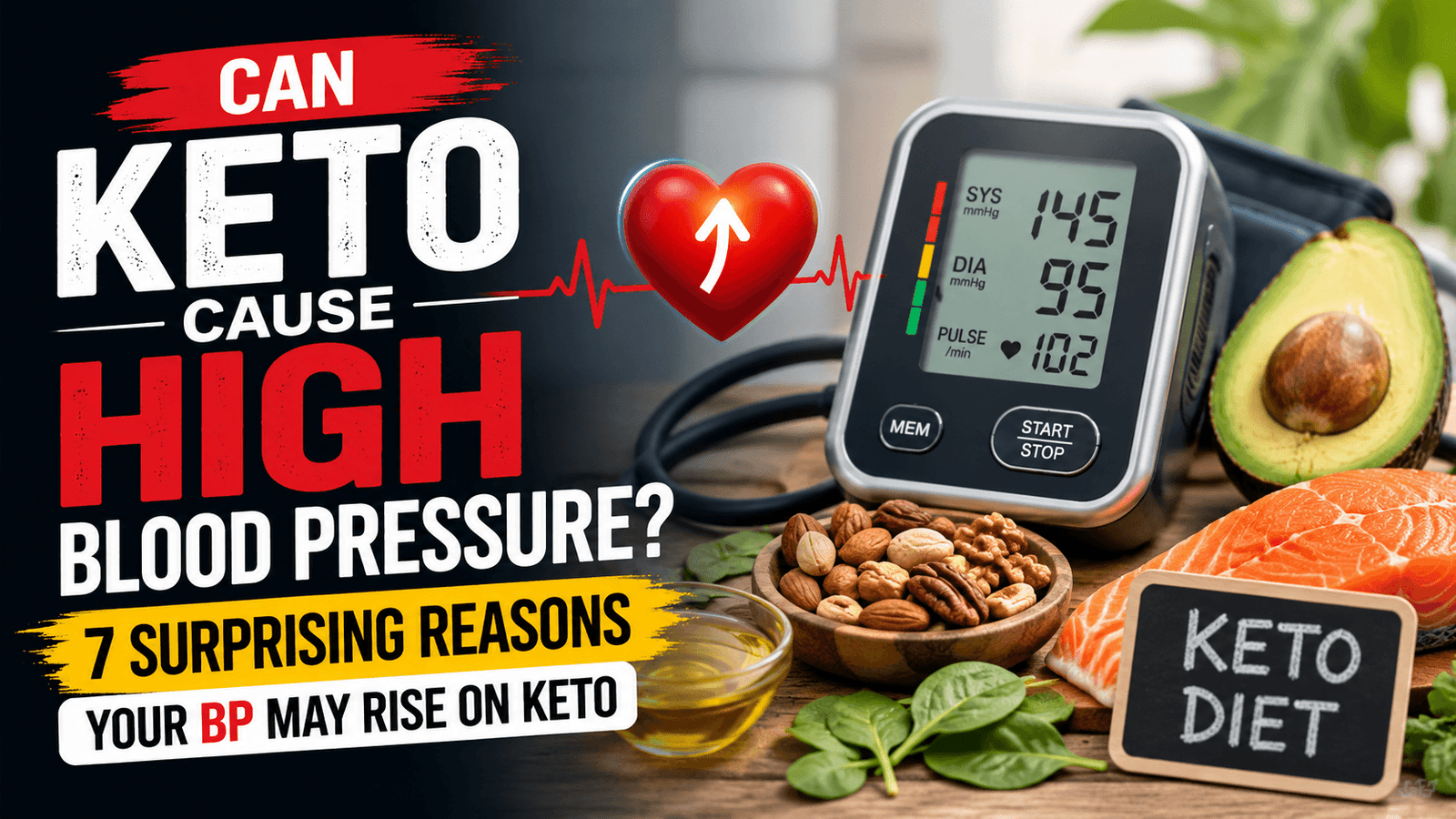
If you’ve recently started a ketogenic diet and noticed your blood pressure is higher than usual, you may be wondering: can keto cause high blood pressure?
It’s a reasonable question. The keto diet dramatically changes the way you eat by restricting carbohydrates and increasing fat intake. During the first few weeks, your body also goes through significant changes in fluid balance, electrolyte levels, appetite, and metabolism.
But here’s the surprising part: keto itself does not appear to consistently cause high blood pressure. Research on ketogenic diets has found mixed results, with some studies showing little overall change in blood pressure and others finding modest improvements. A 2024 systematic review of 23 randomized controlled trials involving 1,664 participants found no significant overall effect of ketogenic diets on systolic or diastolic blood pressure. More recent research has also reported improvements in blood pressure alongside weight and metabolic improvements in some people following keto.
So why might your blood pressure rise after starting keto?
Let’s look at 7 possible reasons.
1. You’re Eating Too Many High-Sodium Keto Foods
One of the biggest issues may not be ketosis itself—but what you’re eating while following keto.
Many popular keto-friendly convenience foods can contain substantial amounts of sodium. Examples include:
- Processed meats
- Bacon and sausages
- Salty cheeses
- Packaged keto snacks
- Pickles
- Salted nuts
- Processed sauces and dressings
- Ready-made low-carb meals
Sodium can contribute to increased blood pressure in people who are salt-sensitive. That’s why simply labeling a food “keto-friendly” doesn’t automatically make it a heart-healthy choice.
Instead, build your meals around minimally processed foods such as eggs, fish, poultry, non-starchy vegetables, nuts, seeds, avocado, and healthy oils.
The American Heart Association’s 2026 dietary guidance emphasizes choosing minimally processed foods and reducing sodium as part of a heart-healthy dietary pattern.
Tip: Check the nutrition label on packaged keto foods and pay attention to sodium—not just carbohydrates.
2. You’re Dehydrated During the Early Keto Phase
When you dramatically reduce carbohydrates, your body stores less glycogen. Glycogen is stored along with water, so reducing carbohydrate intake can cause your body to lose water more quickly, particularly during the early stages of keto.
This is one reason some people experience rapid changes in body weight during the first week or two.
If you’re not replacing fluids appropriately, dehydration can make you feel unwell and may affect your cardiovascular measurements.
However, don’t assume that drinking huge amounts of water—or aggressively adding salt—is the solution. Your individual fluid and electrolyte needs can vary depending on your health, activity level, climate, medications, and other factors.
If you’re experiencing persistent dizziness, weakness, palpitations, or unusual blood-pressure readings, speak with a healthcare professional.
3. You’re Not Getting Enough Potassium-Rich Foods
Potassium plays an important role in maintaining normal blood pressure and fluid balance.
Unfortunately, some people interpret keto as “eat meat, cheese, and butter” while avoiding many fruits and vegetables. That can result in a diet that lacks important nutrients.
You don’t have to eliminate vegetables to follow keto.
Depending on your carbohydrate targets, you can include plenty of low-carb vegetables such as:
- Spinach
- Kale
- Broccoli
- Cauliflower
- Zucchini
- Mushrooms
- Asparagus
- Avocado
These foods can provide potassium, magnesium, fiber, and other nutrients.
However, do not start potassium supplements on your own, especially if you have kidney disease or take medications that affect potassium levels.
4. Your Keto Diet Is Heavy in Saturated Fat
Keto isn’t automatically a healthy diet—or an unhealthy diet. The quality of the foods you choose matters.
A poorly planned keto diet may contain large amounts of butter, processed meats, fatty cuts of meat, and other foods high in saturated fat.
While saturated fat isn’t the same thing as sodium and doesn’t directly explain every increase in blood pressure, an overall diet high in saturated fat may negatively affect cardiovascular risk factors in some people.
Interestingly, a 2026 systematic review of ketogenic diets and cardiovascular health found improvements in body weight, glucose control, triglycerides, and systolic blood pressure, but also found increases in LDL cholesterol and total cholesterol. The researchers emphasized the importance of individualized risk-benefit assessment.
A better approach is to emphasize unsaturated fat sources such as:
- Avocado
- Extra-virgin olive oil
- Nuts
- Seeds
- Fatty fish
This allows you to follow a lower-carbohydrate eating pattern without relying heavily on processed or saturated-fat-rich foods.
5. You’re Stressed, Sleeping Poorly, or Overtraining
Sometimes keto gets blamed for a blood-pressure change that actually has another cause.
Starting a restrictive diet can be stressful. You may also be eating fewer calories, exercising more, sleeping poorly, or worrying about whether you’re “doing keto correctly.”
Stress and inadequate sleep can influence blood pressure.
Likewise, intense workouts can temporarily change blood pressure. Your blood pressure also naturally fluctuates throughout the day.
That’s why one unusual reading doesn’t necessarily mean that keto is causing hypertension.
Try measuring your blood pressure under consistent conditions and keeping a simple record of your readings.
If your numbers remain consistently elevated, discuss them with your healthcare provider rather than assuming the diet is responsible.
6. You’re Taking Medications That May Need Adjustment
This is an especially important point for people who already have high blood pressure or diabetes.
When someone loses weight or makes major dietary changes, their blood pressure or blood glucose may change. In some cases, medications may eventually need to be adjusted by a healthcare professional.
That does not mean you should stop or change medication yourself.
If you take blood-pressure medication and your readings change significantly after starting keto, contact your healthcare provider.
The opposite situation can also occur: if your blood pressure remains high despite dietary changes, your medication or overall treatment plan may need review.
7. You’re Following a “Dirty Keto” Diet
There’s a huge difference between nutrient-dense keto and what is sometimes called “dirty keto.”
Dirty keto focuses primarily on keeping carbohydrates low, regardless of food quality.
That could mean regularly eating:
- Processed meats
- Fast food
- Fried foods
- Packaged snacks
- Artificially sweetened desserts
- High-sodium convenience foods
Technically, some of these foods can fit a low-carb diet.
But a diet can be low in carbohydrates while still being high in sodium, heavily processed, and nutritionally unbalanced.
A more balanced keto approach focuses on whole or minimally processed foods, plenty of non-starchy vegetables, adequate protein, healthy fats, and sensible portions.
So, Can Keto Cause High Blood Pressure?
The short answer is: keto does not appear to universally cause high blood pressure.
Research is actually more complicated than the headlines sometimes suggest.
A 2024 meta-analysis of randomized controlled trials found that ketogenic diets did not significantly increase or decrease systolic or diastolic blood pressure overall.
Other research has reported modest reductions in blood pressure among people following ketogenic diets, particularly alongside weight loss and improvements in metabolic health.
This means that if your blood pressure rises after starting keto, it’s worth looking beyond ketosis itself.
Your sodium intake, hydration, food quality, potassium intake, stress, sleep, medications, weight changes, and existing health conditions may all be relevant.
How to Follow Keto in a More Heart-Friendly Way
If you enjoy keto but are concerned about your blood pressure, consider these practical strategies:
Choose More Whole Foods
Build most of your meals around foods such as fish, eggs, poultry, vegetables, avocado, nuts, seeds, and healthy oils.
Watch Your Sodium
Don’t automatically add extra salt to every meal. Check packaged foods and processed meats for sodium content.
Eat Plenty of Low-Carb Vegetables
Vegetables can provide fiber, potassium, magnesium, and other nutrients while keeping carbohydrates relatively low.
Choose Healthy Fats
Use foods rich in unsaturated fats more often, such as olive oil, avocado, nuts, seeds, and fatty fish.
Stay Hydrated
Drink fluids regularly and pay attention to thirst, especially during the early stages of carbohydrate restriction or during hot weather.
Monitor Your Blood Pressure
If you’re concerned about your blood pressure, measure it consistently rather than relying on a single reading.
Don’t Change Medication Without Medical Advice
If you’re taking blood-pressure medication, don’t stop, reduce, or increase your dose because you started keto. Discuss changes in your readings with your healthcare provider.
When Should You Talk to a Doctor?
If your blood pressure is repeatedly higher than your usual readings, it’s a good idea to speak with a healthcare professional.
You should be especially cautious if you already have hypertension, kidney disease, heart disease, diabetes, or take medications that affect blood pressure or electrolytes.
And if you ever have a severely high blood pressure reading accompanied by symptoms such as chest pain, shortness of breath, severe headache, weakness, confusion, or vision changes, seek urgent medical care.
Don’t assume that a keto diet is responsible for serious symptoms.
Final Thoughts
So, can keto cause high blood pressure? For most people, the evidence doesn’t show that ketogenic diets inherently cause hypertension.
However, the way you follow keto can matter.
A diet built around processed meats, salty packaged foods, inadequate vegetables, poor hydration, and excessive saturated fat is very different from a well-planned ketogenic diet centered on whole foods.
If your blood pressure has increased since starting keto, don’t immediately blame ketosis. Look at your entire diet and lifestyle, monitor your readings, and discuss persistent changes with a healthcare professional.
Keto can be a useful eating pattern for some people, but “low carb” doesn’t automatically mean “heart healthy.” The quality of your food choices still matters.
Disclaimer: This article is for educational and informational purposes only and is not medical advice. If you have high blood pressure or take medication, speak with a qualified healthcare professional before making significant dietary changes.