If you’re following a keto diet, you probably already know that carbohydrates are something you need to keep an eye on. But what about corn? It looks like a healthy vegetable, it’s naturally sweet, and it’s commonly found in salads, soups, tacos, and countless side dishes.
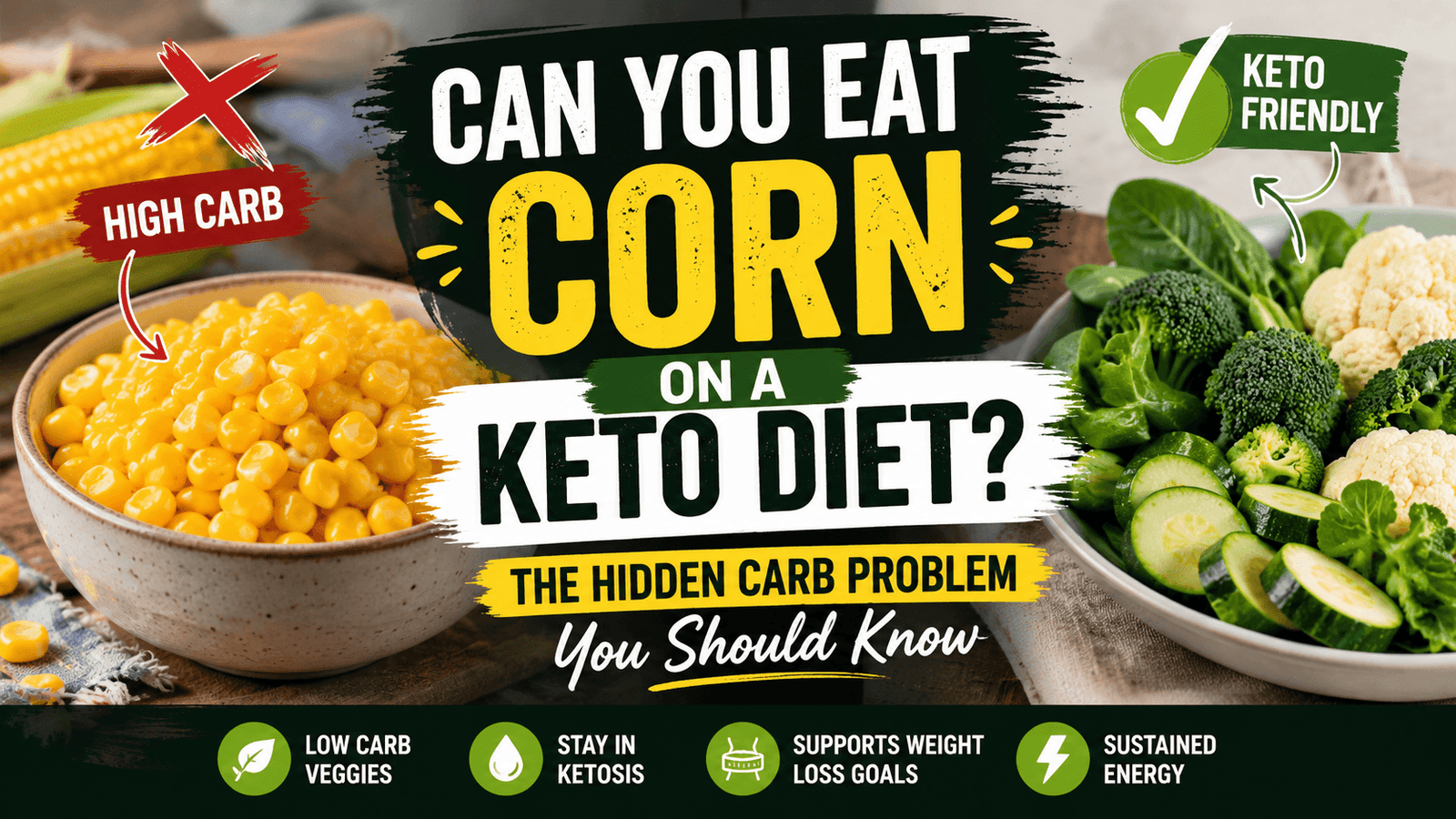
So, can you eat corn on a keto diet?
The short answer is: corn is generally not considered a keto-friendly food because it contains a relatively high amount of carbohydrates for a low-carb diet. While a small portion may fit into some people’s daily carb allowance, regular servings of corn can make it surprisingly difficult to stay within your keto carb limit.
Let’s take a closer look at corn’s nutrition, why it can be challenging on keto, and what you can eat instead.
Is Corn Keto-Friendly?
Corn is a grain rather than a traditional low-carb vegetable. Although it provides nutrients such as fiber, folate, and some vitamins and minerals, it also contains a significant amount of carbohydrates.
A typical serving of cooked sweet corn can contain around 20–25 grams of total carbohydrates per cup, depending on the variety and preparation. That’s a substantial amount when you’re following a strict ketogenic diet.
Most ketogenic diets aim to keep daily carbohydrate intake relatively low, often around 20–50 grams of net carbs per day, although individual needs can vary.
This means that a single generous serving of corn could use a large portion of your daily carbohydrate budget.
That’s the main reason corn isn’t usually included on keto food lists.
Why Does Corn Have So Many Carbs?
Corn naturally contains starch, which is a type of carbohydrate. When you eat corn, your body breaks down those carbohydrates into glucose.
While carbohydrates aren’t automatically “bad,” keto works differently from a traditional balanced diet. The goal is to significantly reduce carbohydrate intake so your body can enter and maintain ketosis, a metabolic state in which it relies more heavily on fat and ketones for energy.
Because corn is relatively rich in starch, eating large portions may make it harder for you to remain within your desired carbohydrate range.
This is especially important if you’re following a strict ketogenic diet for carbohydrate control.
Can You Eat Corn on a Keto Diet in Small Amounts?
This is where things get more interesting.
The answer isn’t necessarily an absolute “never.”
If you’re following a more flexible low-carb approach, a very small portion of corn may fit into your daily carbohydrate allowance. However, you’ll need to account for the carbs in the corn along with everything else you eat that day.
For example, adding a tablespoon or two of corn to a large low-carb salad is very different from eating a full bowl of corn as a side dish.
Your overall daily carbohydrate intake matters.
If you’re trying to maintain strict ketosis, however, you may find it easier to avoid corn and choose lower-carb vegetables instead.
Corn Nutrition: What You Should Know
Corn isn’t an unhealthy food. In fact, it contains several useful nutrients.
Corn can provide:
- Fiber
- Folate
- Vitamin C
- Some B vitamins
- Magnesium
- Potassium
- Plant compounds such as carotenoids
The problem for keto isn’t necessarily that corn lacks nutritional value.
The issue is its carbohydrate content compared with other vegetables.
Keto encourages you to choose nutrient-dense foods that provide plenty of vitamins, minerals, and fiber without using too much of your daily carb allowance.
That’s why vegetables such as leafy greens, zucchini, cauliflower, broccoli, mushrooms, and asparagus are often easier to include in a ketogenic meal plan.
Corn vs. Low-Carb Vegetables
One of the easiest ways to understand why corn can be difficult on keto is to compare it with vegetables that are naturally lower in carbohydrates.
For example, you can build a large plate around:
- Spinach
- Lettuce
- Cucumber
- Zucchini
- Broccoli
- Cauliflower
- Mushrooms
- Asparagus
- Cabbage
These foods can provide volume, fiber, and important nutrients while generally requiring less of your daily carb budget than a large serving of corn.
This doesn’t mean you have to completely eliminate every food containing carbohydrates. Instead, keto is largely about making strategic choices and keeping your overall intake within your target.
What About Popcorn on Keto?
If you’re wondering whether popcorn is a better option, be careful.
Popcorn is made from corn, so it still contains carbohydrates. While air-popped popcorn may seem light because of its large volume, the carbohydrates can add up quickly when you eat several cups.
And commercially prepared popcorn can contain additional ingredients such as sugar, flavorings, or other carbohydrate-containing ingredients.
If you’re following strict keto, popcorn generally isn’t the easiest snack to fit into your diet.
Instead, consider keto-friendly snacks such as cheese, olives, nuts in controlled portions, or low-carb vegetables with a suitable dip.
What About Corn Flour and Cornmeal?
Corn doesn’t only appear as whole kernels.
You can also find it in:
- Corn flour
- Cornmeal
- Corn tortillas
- Corn chips
- Corn cereal
- Corn-based snacks
- Corn starch
These products can also contribute significant amounts of carbohydrates.
In fact, processed corn products can sometimes be even easier to overeat because they are concentrated and often appear in snack foods and baked products.
If you’re trying to keep your carbs low, always check the nutrition label rather than assuming that a product is keto-friendly simply because it contains a vegetable ingredient.
Keto-Friendly Alternatives to Corn
The good news is that you don’t have to give up the dishes you love just because you’re following keto.
You can often replace corn with lower-carb ingredients while keeping a similar texture, color, or flavor profile.
1. Chopped Bell Peppers
Bell peppers can add sweetness, crunch, and vibrant color to salads, casseroles, and skillet meals.
Use them in moderation based on your individual carb target.
2. Cauliflower
Cauliflower is one of the most versatile keto vegetables. You can use it in casseroles, rice-style dishes, soups, and many other recipes.
3. Zucchini
Zucchini works especially well in stir-fries, salads, casseroles, and grilled vegetable dishes.
4. Broccoli
Broccoli provides fiber and nutrients while being a popular choice for low-carb meal plans.
5. Chopped Cabbage
Cabbage can provide plenty of volume and works well in slaws, stir-fries, soups, and skillet recipes.
How to Enjoy the Flavor of Corn Without Eating Corn
If what you really miss is the sweet, slightly buttery flavor of corn, you can experiment with keto-friendly combinations.
Try sautéing low-carb vegetables with:
- Butter
- Garlic
- Black pepper
- Herbs
- Parmesan cheese
- A small amount of chili
- Fresh lime juice
These ingredients can make simple vegetables much more satisfying.
You can also create keto-friendly “corn-style” recipes using combinations of cauliflower, zucchini, or other low-carb vegetables.
The goal isn’t to perfectly duplicate corn. It’s to recreate the flavors and textures you enjoy while keeping your meal compatible with your eating plan.
Does Corn Kick You Out of Ketosis?
A small amount of corn doesn’t automatically mean you’ll be kicked out of ketosis.
What matters is your total carbohydrate intake, individual metabolism, activity level, and overall diet.
However, because a normal serving of corn can contain a significant amount of carbohydrates, eating a large portion may make it harder to stay within the carb range required for ketosis.
If you’re following strict keto, it’s usually simpler to choose vegetables that are naturally lower in carbohydrates.
If you’re following a less restrictive low-carb diet, you may have more flexibility.
So, Can You Eat Corn on a Keto Diet?
So, can you eat corn on a keto diet?
Technically, a small amount may fit into some people’s keto meal plans, but corn is generally not considered a good staple food for a strict ketogenic diet because it contains a relatively high amount of carbohydrates.
If you’re trying to stay in ketosis, you may want to prioritize lower-carb vegetables such as cauliflower, zucchini, broccoli, spinach, mushrooms, asparagus, and leafy greens.
If you decide to eat corn occasionally, pay attention to portion size and count its carbohydrates as part of your daily intake.
Remember: keto isn’t about whether one individual food is “good” or “bad.” It’s about how the foods you choose fit into your overall carbohydrate target and nutritional needs.
Final Thoughts
Corn can be nutritious, but that doesn’t necessarily make it ideal for a ketogenic diet.
Its natural starch content means that a typical serving can consume a meaningful portion of your daily carb allowance. For people following strict keto, there are usually better vegetable choices that provide nutrients and volume with fewer carbohydrates.
The good news is that there are plenty of delicious alternatives. With ingredients like cauliflower, zucchini, broccoli, cabbage, and leafy greens, you can create satisfying keto meals without relying on high-carb vegetables.
If you’re unsure whether a particular food fits your personal keto plan, check its nutrition information and consider your total daily carbohydrate intake.
Note: Corn isn’t completely forbidden, but if you’re following strict keto, it’s best treated as an occasional, small-portion food rather than a regular part of your meals.