Giving up pasta can be one of the hardest parts of starting a low-carb or keto lifestyle. Traditional pasta is usually made from wheat flour and can contain a significant amount of carbohydrates, which may not fit well into a ketogenic diet or a carefully managed diabetic-friendly eating plan.
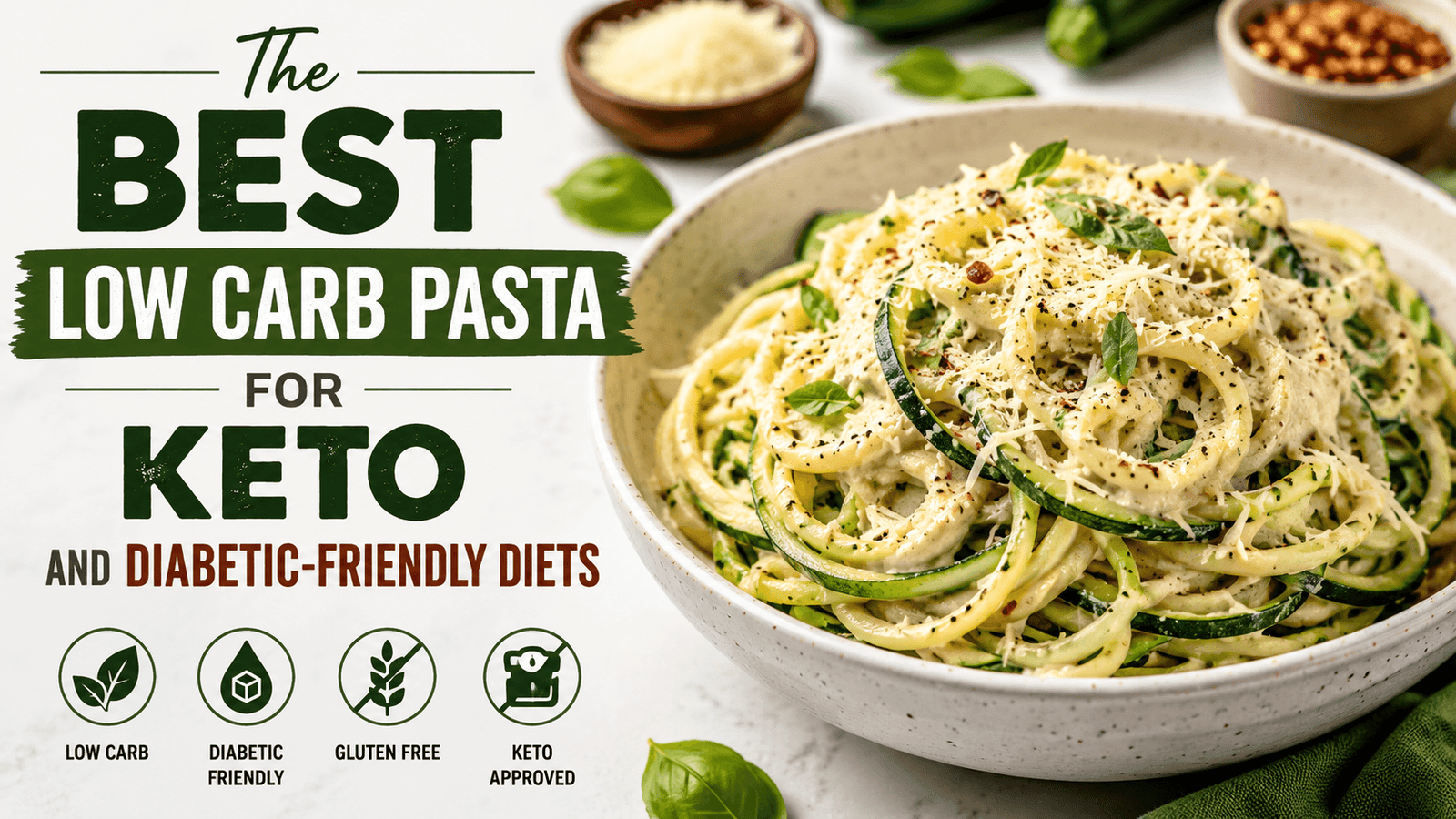
The good news? You don’t have to give up pasta completely.
Today, there are many delicious low-carb pasta alternatives made with ingredients such as almond flour, konjac, vegetables, eggs, cheese, and legumes. The right choice can help you enjoy your favorite pasta dishes while keeping an eye on your carbohydrate intake.
In this guide, we’ll explore the best low carb pasta options, what to look for when shopping, how to prepare them, and some delicious ideas for your next keto-friendly pasta meal.
What Is Low Carb Pasta?
Low-carb pasta is designed to contain fewer carbohydrates than conventional wheat-based pasta. Depending on the ingredients, some varieties can have significantly fewer net carbs per serving.
Traditional pasta is primarily made from wheat flour, while low-carb alternatives may use ingredients such as:
- Almond flour
- Coconut flour
- Eggs
- Cheese
- Konjac or shirataki
- Cauliflower
- Zucchini
- Hearts of palm
- Fiber-rich ingredients
Not every product marketed as “low carb” is necessarily suitable for everyone following a keto or diabetic-friendly diet. Always check the nutrition label, serving size, total carbohydrates, and fiber before making your choice.
Why Choose Low Carb Pasta?
There are several reasons people choose low-carb pasta alternatives.
1. It Can Help Reduce Carbohydrate Intake
For people following a keto diet, limiting carbohydrates is an important part of maintaining nutritional ketosis. Replacing regular pasta with a lower-carb alternative can make it easier to enjoy pasta-style meals while staying within your daily carbohydrate goals.
2. It Can Fit Into a Balanced Meal
Pasta doesn’t have to be the entire meal. Pairing a low-carb pasta with protein, non-starchy vegetables, and a healthy fat can create a more balanced dish.
3. More Variety for Keto Meals
Eating the same foods every day can become boring. Low-carb pasta gives you another way to enjoy familiar dishes such as spaghetti, Alfredo, carbonara, and pasta salad.
4. It May Be Useful for People Watching Blood Sugar
Some low-carb pasta alternatives contain fewer digestible carbohydrates than conventional pasta. However, individual blood glucose responses can vary considerably, so people with diabetes should consider their own nutrition plan and monitor how specific foods affect them.
7 Best Low Carb Pasta Alternatives
There isn’t one perfect pasta for everyone. Your best choice will depend on taste, texture, ingredients, carbohydrate content, and your dietary needs.
1. Shirataki Pasta
Shirataki noodles are made primarily from konjac, a fiber-rich root vegetable. They are extremely low in calories and carbohydrates and are often used as a pasta or noodle substitute.
Their texture is different from traditional pasta, but they work particularly well with flavorful sauces.
Best for: Very low-carb and keto meals.
Tip: Rinse shirataki noodles thoroughly and prepare them according to the package instructions to improve their texture and aroma.
2. Hearts of Palm Pasta
Hearts of palm pasta is made from the inner portion of certain palm plants. It has a mild flavor and a texture that can resemble pasta.
It works especially well with tomato-based sauces, pesto, garlic butter, or creamy sauces.
Best for: People looking for a vegetable-based pasta alternative.
3. Zucchini Noodles
Zucchini noodles, often called “zoodles,” are one of the simplest homemade low-carb pasta alternatives.
You can make them using a spiralizer or vegetable peeler. Zoodles pair beautifully with pesto, marinara, garlic, olive oil, or grilled chicken.
Best for: Fresh, light keto meals.
One advantage is that you can prepare them at home using a fresh vegetable rather than purchasing packaged pasta.
4. Spaghetti Squash
Spaghetti squash is another popular pasta substitute. When cooked, the flesh naturally separates into spaghetti-like strands.
It has a slightly sweet, mild flavor and works well with meat sauce, pesto, cheese, or roasted vegetables.
Best for: A whole-food alternative to traditional spaghetti.
Because spaghetti squash still contains carbohydrates, portion size matters if you’re following a strict keto diet.
5. Almond Flour Pasta
Some specialty low-carb pastas use almond flour as a primary ingredient. Almond flour provides a nutty flavor and can create a more traditional pasta-like experience compared with some vegetable substitutes.
However, nutritional values vary significantly between brands and recipes, so check the label carefully.
Best for: People who want a more traditional pasta texture.
6. Egg-Based Pasta
Egg-based keto pasta recipes typically combine eggs with ingredients such as cream cheese, mozzarella, or other low-carb ingredients.
Homemade egg pasta can be surprisingly satisfying and can be used in dishes such as lasagna, noodles, or creamy pasta recipes.
Best for: Homemade keto cooking.
7. Cauliflower Pasta Alternatives
Cauliflower is another versatile low-carb ingredient that can be used to create pasta-like dishes. It can also be incorporated into baked pasta alternatives, casseroles, and cheesy dishes.
Cauliflower works particularly well with rich sauces, herbs, cheese, and roasted garlic.
Best for: Vegetable-focused keto meals.
How to Choose the Best Low Carb Pasta
When you’re standing in the grocery store comparing different products, don’t rely only on the words “keto” or “low carb” printed on the front of the package.
Instead, check the nutrition label.
Look at Total Carbohydrates
Start by checking the total carbohydrate content per serving. Make sure you also pay attention to the actual serving size.
Check Dietary Fiber
Fiber isn’t digested in the same way as many other carbohydrates. Some people following a low-carb diet calculate net carbs by subtracting dietary fiber from total carbohydrates.
However, labeling rules and individual dietary needs can vary, so don’t automatically assume every product’s advertised “net carb” number tells the whole story.
Read the Ingredient List
Look for ingredients that fit your dietary preferences. Some products may contain wheat, starches, added sugars, or other ingredients that you may want to limit.
Consider Protein
A pasta alternative containing protein can make your meal more filling, particularly when combined with vegetables and a healthy sauce.
Don’t Forget Taste and Texture
Nutrition is important, but you’ll be much more likely to enjoy your low-carb lifestyle if your food actually tastes good.
Try several varieties and find the texture you enjoy most.
How to Make a Delicious Low Carb Pasta Meal
Choosing the best low carb pasta is only part of the equation. What you add to it matters too.
Here is a simple formula for creating a satisfying keto-friendly pasta bowl:
Low-carb pasta + protein + vegetables + healthy fat + flavorful sauce
For example, you could combine zucchini noodles with grilled chicken, spinach, Parmesan cheese, olive oil, and homemade pesto.
Another option is shirataki noodles with ground beef, mushrooms, garlic, Parmesan, and a creamy sauce.
For a seafood meal, try hearts of palm pasta with shrimp, garlic, butter, lemon, and fresh parsley.
The possibilities are almost endless.
Is Low Carb Pasta Good for Diabetics?
Low-carb pasta may be an option for some people with diabetes because certain alternatives contain fewer digestible carbohydrates than traditional pasta.
However, “diabetic-friendly” does not mean a food is automatically appropriate for everyone with diabetes.
Blood glucose responses can vary based on the ingredients, portion size, cooking method, and what else is included in the meal.
If you have diabetes, pay attention to the nutrition label and your individual meal plan. If you’re unsure how a particular product fits your diet, speak with your doctor or a registered dietitian.
It’s also important to remember that sauces can add carbohydrates. A low-carb pasta covered in a sugary sauce may no longer be a particularly low-carb meal.
Delicious Low Carb Pasta Recipes to Try
Once you’ve found your favorite pasta alternative, experiment with different flavors.
Creamy Garlic Parmesan Pasta
Try your favorite low-carb noodles with butter, garlic, heavy cream, Parmesan cheese, black pepper, and fresh parsley.
Keto Pesto Pasta
Combine zucchini noodles or hearts of palm pasta with homemade basil pesto, Parmesan, cherry tomatoes, and grilled chicken.
Low Carb Spaghetti Bolognese
Serve shirataki noodles or spaghetti squash with a homemade beef and tomato sauce. Check your tomato sauce carefully for added sugar.
Lemon Garlic Shrimp Pasta
Combine a low-carb pasta alternative with shrimp, garlic, lemon juice, butter, parsley, and a little Parmesan cheese for a quick dinner.
Common Mistakes to Avoid
Even healthy ingredients can become part of an unbalanced meal if portions and toppings aren’t considered.
Avoid these common mistakes:
- Assuming every “keto” pasta is extremely low in carbs
- Ignoring serving sizes
- Choosing sauces with added sugar
- Eating very large portions
- Focusing only on carbs and ignoring overall nutrition
- Expecting every pasta alternative to taste exactly like wheat pasta
The goal isn’t necessarily to find a perfect copy of traditional pasta. It’s to find an alternative that tastes delicious and works with your dietary goals.
Final Thoughts
Finding the best low carb pasta can make keto and low-carb eating much more enjoyable. From shirataki noodles and hearts of palm pasta to zucchini noodles, spaghetti squash, and homemade almond flour or egg-based alternatives, there are plenty of options to explore.
The most important thing is to check the nutrition facts, consider portion sizes, choose ingredients that fit your dietary needs, and pair your pasta with nutritious proteins, vegetables, and healthy fats.
If you’re following a diabetic-friendly diet, remember that individual blood sugar responses can differ. A low-carb pasta option may fit into your meal plan, but it’s always smart to consider your personal nutrition goals and healthcare guidance.
So, the next time you’re craving a comforting bowl of pasta, don’t assume you have to skip it. Pick your favorite low-carb alternative, add a delicious sauce, and create a pasta night that fits your lifestyle.
Frequently Asked Questions
What is the best low carb pasta for keto?
Shirataki noodles, hearts of palm pasta, zucchini noodles, and certain almond-flour or egg-based pastas can be good options for keto. The best choice depends on your preferred texture, taste, and daily carbohydrate target.
Is low carb pasta better than regular pasta?
For someone intentionally limiting carbohydrates, a suitable low-carb pasta can make it easier to reduce carbohydrate intake compared with traditional wheat pasta. However, nutritional quality varies between products, so always check the label.
Can diabetics eat low carb pasta?
Some people with diabetes may include low-carb pasta in their meal plan. However, carbohydrate content, portion size, ingredients, and individual blood glucose responses should all be considered.
Are zucchini noodles keto-friendly?
Zucchini noodles can be a great option for keto diets because zucchini is a relatively low-carbohydrate vegetable. Portion size and the ingredients added to the dish still matter.
Does low carb pasta taste like regular pasta?
It depends on the type. Some alternatives have a texture and flavor noticeably different from wheat pasta, while specialty almond-flour and egg-based products may provide a more traditional pasta-like experience.
Disclaimer: This article is for general informational and educational purposes only and is not medical advice. If you have diabetes or another medical condition, consult your healthcare professional or registered dietitian before making significant dietary changes.