If you’ve ever wondered how does the keto diet work for weight loss, the answer starts with one simple change: your body begins using more fat for fuel instead of relying primarily on carbohydrates.
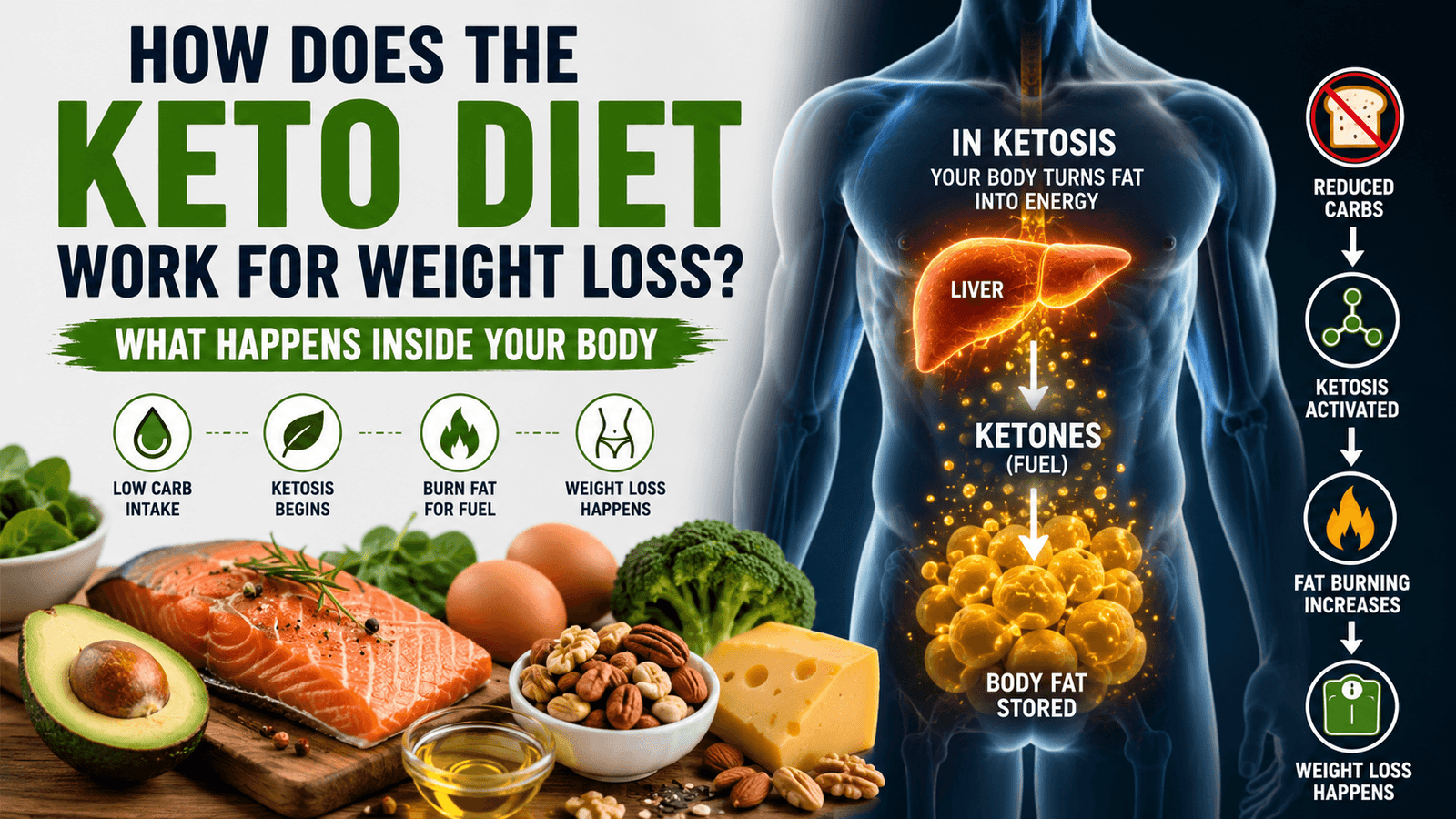
The ketogenic, or keto, diet is a low-carbohydrate, high-fat eating pattern designed to put your body into a metabolic state called ketosis. During ketosis, your liver produces molecules called ketones from fat, which your body can use as an alternative energy source.
But what actually happens inside your body when you reduce carbohydrates? Why can keto lead to weight loss? And is ketosis really the secret behind it?
Let’s break down the science of keto in simple terms.
What Is the Keto Diet?
The keto diet is an eating pattern that significantly reduces carbohydrate intake while increasing dietary fat and providing a moderate amount of protein.
A typical ketogenic diet may contain roughly:
- 70–75% of calories from fat
- 20–25% from protein
- 5–10% from carbohydrates
The exact percentages can vary depending on the individual and the type of ketogenic diet being followed.
Instead of getting most of your energy from foods such as bread, rice, pasta, cereal, potatoes and sugary foods, keto emphasizes foods such as:
- Eggs
- Meat and poultry
- Fish and seafood
- Avocados
- Olive oil
- Nuts and seeds
- Cheese and other full-fat dairy
- Low-carb vegetables
- Healthy fats
The goal isn’t simply to “eat more fat.” The key is keeping carbohydrate intake low enough to encourage your body to produce ketones.
How Does the Keto Diet Work?
So, how does the keto diet work?
Normally, your body prefers glucose, which comes largely from carbohydrates, as a convenient source of energy. When you eat carbohydrates, they are broken down into glucose, which enters your bloodstream and can be stored as glycogen in your liver and muscles.
When carbohydrate intake becomes very low, however, your body has less glucose available from food. Glycogen stores also become depleted.
This encourages your metabolism to rely more heavily on stored and dietary fat.
Your liver converts some of the fatty acids into ketone bodies, including beta-hydroxybutyrate and acetoacetate. These ketones can then be used as an energy source by several tissues, including the brain.
This metabolic state is known as ketosis.
What Happens to Your Body When You Start Keto?
Your body can go through several changes when carbohydrate intake is drastically reduced.
1. Your Insulin Levels May Decrease
Insulin is a hormone that helps your body regulate blood glucose and influences how your body stores and uses energy.
When carbohydrate consumption decreases, blood glucose generally requires less insulin for regulation. Lower insulin levels can make it easier for your body to release stored fat for energy.
However, insulin is only one part of the weight-loss equation. Your overall calorie intake, food choices, activity level and individual metabolism also matter.
2. Your Glycogen Stores Decrease
Your body stores some carbohydrate as glycogen in your liver and muscles.
When you significantly reduce carbohydrate intake, these glycogen stores become depleted.
Glycogen is stored alongside water, so losing glycogen can also cause a noticeable reduction in water weight during the first days or weeks of a low-carb diet.
This is one reason people sometimes see the scale drop quickly when they first start keto.
Important: early weight loss isn’t necessarily all body fat. A significant portion can be water.
3. Your Body Starts Producing More Ketones
As carbohydrate availability decreases, your liver increases ketone production.
This is one of the defining features of a ketogenic diet.
Once ketone levels rise sufficiently, your body can use ketones as an alternative fuel source. Your brain, heart and muscles can all use ketones to varying degrees, although glucose remains important for several physiological processes.
4. Your Appetite May Change
One reason some people find keto helpful for weight management is that high-fat, protein-rich meals can be quite filling.
For some people, eating fewer refined carbohydrates and more protein, fiber-rich vegetables and satisfying fats may reduce hunger and make it easier to naturally eat fewer calories.
This can contribute to weight loss.
However, keto isn’t automatically calorie-free. Foods such as cheese, nuts, oils, butter and fatty meats can be very calorie-dense. Eating large portions can still lead to a calorie surplus.
How Does Keto Actually Help With Weight Loss?
The biggest question is whether ketosis itself causes weight loss.
The answer is more complicated than simply saying “fat burning equals fat loss.”
Your body can burn fat for energy without necessarily losing body fat. To lose stored body fat over time, your body generally needs to use more stored energy than it replaces through food.
Keto may support this process in several ways.
Reduced Appetite
A diet emphasizing protein, fat and low-carb whole foods may help some people feel fuller for longer.
If you naturally consume fewer calories because you’re less hungry, weight loss can follow.
Fewer Refined Carbohydrates
Keto eliminates or sharply limits many foods that are easy to overeat, including sugary drinks, sweets, pastries and many highly processed snack foods.
Replacing these foods with nutrient-dense options can make it easier to control overall food intake.
Increased Fat Utilization
During ketosis, your body increases its reliance on fat and ketones for energy.
This doesn’t automatically guarantee weight loss, but it changes which fuel sources your body is using.
Initial Water Loss
As glycogen stores decrease, associated water is also lost. This can produce a rapid initial drop on the scale.
It’s important not to confuse this early water loss with long-term fat loss.
What Foods Can You Eat on Keto?
If you’re following a keto diet, your meals should generally focus on low-carb foods and minimize foods high in carbohydrates.
Keto-Friendly Foods
Some common keto-friendly choices include:
Protein:
Eggs, chicken, turkey, beef, pork and fish.
Healthy fats:
Avocado, olive oil, olives, nuts, seeds and certain nut butters.
Low-carb vegetables:
Spinach, broccoli, cauliflower, zucchini, cucumber, mushrooms and leafy greens.
Dairy:
Cheese, butter and unsweetened full-fat dairy products, depending on your individual dietary needs.
Seafood:
Salmon, sardines, tuna, shrimp and other naturally low-carb seafood.
What Foods Should You Limit on Keto?
Because carbohydrates are restricted, many traditional foods aren’t suitable for a strict ketogenic diet.
Foods commonly limited include:
- Bread and baked goods
- Pasta
- Rice
- Sugary cereals
- Candy
- Cakes and cookies
- Sugary beverages
- Most traditional desserts
- Potatoes
- Many high-carb snack foods
Some fruits are also relatively high in carbohydrates, although small portions of lower-carb fruits such as berries can sometimes fit into a keto eating plan.
How Long Does It Take to Enter Ketosis?
There isn’t one exact timeline for everyone.
Some people may begin producing higher levels of ketones within a few days of significantly reducing carbohydrates, while others may take longer.
Factors such as your carbohydrate intake, activity level, metabolism, previous diet and individual physiology can influence how quickly ketosis develops.
Common signs people associate with entering ketosis include reduced appetite, increased thirst, frequent urination and changes in energy levels. Some people also experience temporary symptoms often called the “keto flu,” such as headaches, fatigue or irritability.
These symptoms can occur during the transition to a very low-carbohydrate diet.
Is Keto Right for Everyone?
Not necessarily.
Although ketogenic diets can be useful for some people, they aren’t appropriate for everyone. People with certain medical conditions or those taking medications that affect blood sugar, blood pressure or metabolism should speak with a qualified healthcare professional before making major dietary changes.
Pregnant or breastfeeding individuals and people with a history of eating disorders should also seek appropriate professional guidance before starting a restrictive diet.
A sustainable eating pattern should provide adequate nutrition rather than simply focusing on carbohydrate restriction.
Tips for Starting Keto
If you’re considering trying keto, avoid focusing only on cutting carbs. The quality of the foods you eat matters too.
Here are a few practical tips:
1. Focus on Whole Foods
Build meals around minimally processed foods such as eggs, fish, meat, vegetables, avocado, nuts and healthy oils.
2. Eat Enough Protein
Protein helps support muscle maintenance and can increase fullness. Avoid assuming that keto means unlimited fat and very little protein.
3. Include Low-Carb Vegetables
Don’t forget vegetables. Leafy greens, broccoli, cauliflower and other low-carb vegetables provide important vitamins, minerals and fiber.
4. Drink Enough Fluids
Reducing carbohydrates can change fluid and electrolyte balance, particularly during the early stages. Stay adequately hydrated.
5. Don’t Obsess Over the Scale
Your weight can fluctuate because of water, glycogen, food volume and other factors. Look at longer-term trends rather than judging progress from one day’s number.
The Bottom Line: How Does the Keto Diet Work for Weight Loss?
So, how does the keto diet work for weight loss?
The ketogenic diet drastically reduces carbohydrate intake, which lowers the availability of glucose and encourages the body to increase fat utilization and ketone production. This metabolic shift can help some people manage appetite and reduce overall calorie intake, which may support weight loss.
However, ketosis isn’t a magic switch that automatically burns away body fat. Sustainable weight loss still depends on overall energy balance, food quality, physical activity, sleep and long-term adherence.
If you decide to try keto, focus on nutritious whole foods, adequate protein, plenty of low-carb vegetables and healthy fats rather than relying heavily on processed “keto” products.
And if you’re looking for delicious ways to make the lifestyle easier, keto recipes can help you create satisfying meals without feeling like you’re constantly missing out on your favorite foods.