Following a keto diet doesn’t mean you have to give up sweet flavors forever. From keto cheesecakes and cookies to coffee and homemade sauces, there are plenty of ways to enjoy sweetness while keeping your carbohydrate intake low.
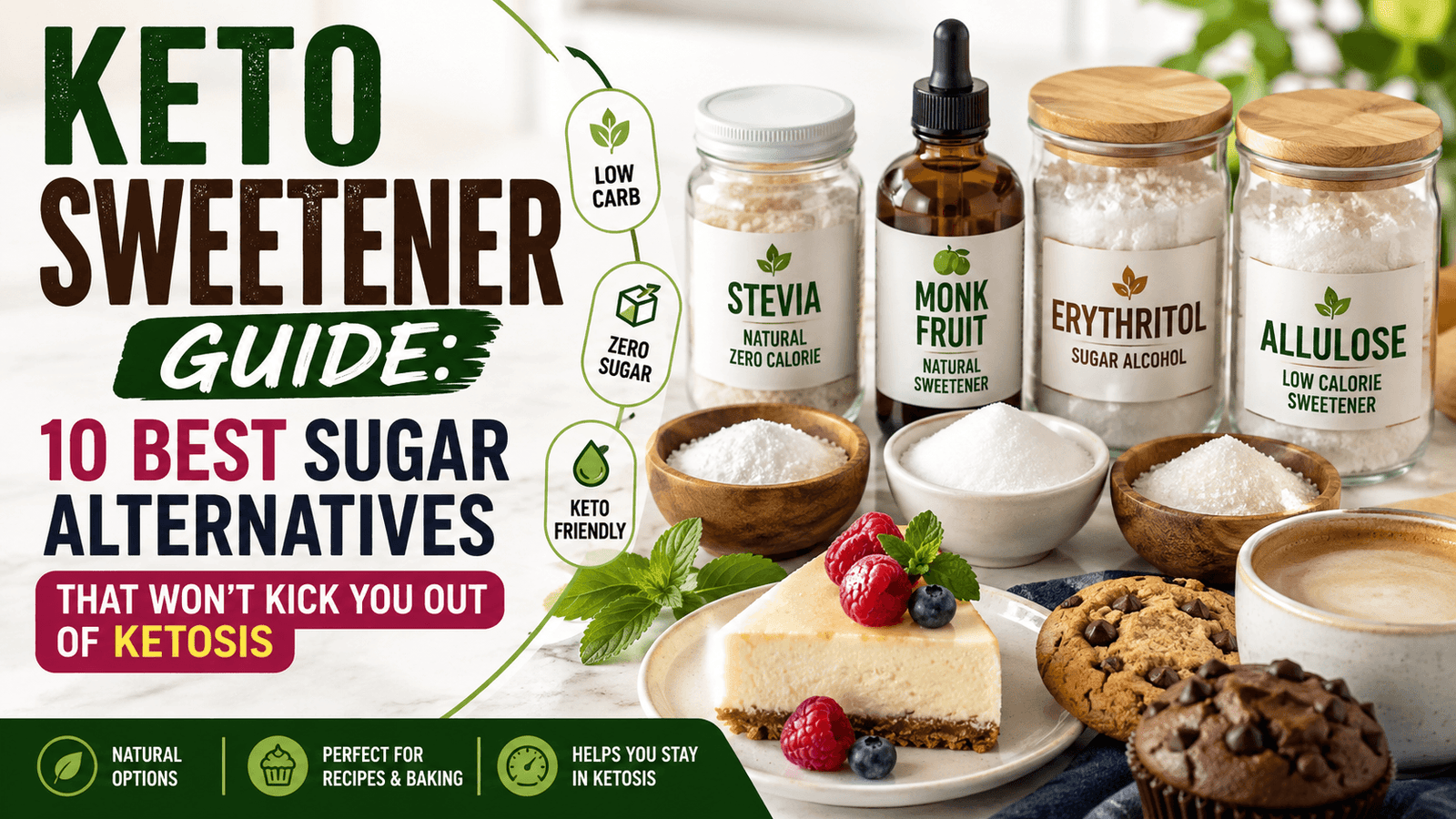
The key is choosing the right keto sweetener.
Traditional table sugar is high in carbohydrates and can quickly use up a significant portion of your daily keto carb allowance. Fortunately, several low-carb sweeteners can provide sweetness without the same carbohydrate load as regular sugar.
But not every sugar substitute is created equal. Some can affect blood sugar, some may cause digestive discomfort, and others may be blended with hidden sources of carbohydrates.
In this guide, we’ll look at 10 of the best keto sweeteners, how they work, their pros and cons, and what to consider when choosing the right one for your keto recipes.
What Is a Keto Sweetener?
A keto sweetener is a sugar alternative that is generally low in digestible carbohydrates and can be used to add sweetness to food and drinks while following a ketogenic diet.
Common keto-friendly sweeteners include stevia, monk fruit, erythritol, allulose, and certain blends.
Unlike regular sugar, many of these sweeteners have little impact on blood glucose or contain very few usable carbohydrates. However, their effects can vary from person to person.
When choosing a keto sweetener, it’s important to look beyond the front of the package. Always check the ingredient list and nutrition facts because some products marketed as low-carb may contain added sugars or higher-carb fillers.
10 Best Keto Sweeteners to Try
1. Stevia
Stevia is one of the most popular natural keto sweeteners. It comes from the leaves of the Stevia rebaudiana plant and is considerably sweeter than regular sugar.
Because only a small amount is needed, stevia can be useful in coffee, tea, smoothies, sauces, and keto desserts.
Pros:
- Very low in calories
- Extremely sweet compared with sugar
- Commonly available
- Useful for drinks and desserts
Cons:
- Can have a noticeable aftertaste for some people
- Pure stevia is much sweeter than sugar, so measuring can take some adjustment
If you’re new to keto baking, try a stevia blend designed specifically for cooking and baking.
2. Monk Fruit Sweetener
Monk fruit has become a favorite among people following low-carb and keto diets. It is derived from monk fruit and gets its sweetness from compounds called mogrosides.
Pure monk fruit extract is extremely sweet, so commercial products are often blended with another ingredient to make the sweetness easier to measure.
Pros:
- Naturally derived
- Very sweet
- Popular for keto-friendly recipes
- Works well in beverages and desserts
Cons:
- Pure monk fruit can be difficult to measure
- Some commercial blends contain other ingredients, so labels should be checked carefully
Monk fruit can be particularly useful when you want a sugar-like sweetness without using traditional sugar.
3. Erythritol
Erythritol is a sugar alcohol that has been widely used in low-carb and keto recipes. It provides sweetness with very few usable carbohydrates and has a texture that can work well in baking.
It is especially popular in recipes such as keto cookies, cakes, frostings, and cheesecakes.
Pros:
- Low in calories
- Generally has a small effect on blood glucose
- Useful for baking
- Provides some of the texture associated with sugar
Cons:
- Large amounts may cause digestive discomfort
- Can produce a cooling sensation in the mouth
- May crystallize in certain recipes
Erythritol is often combined with stevia or monk fruit to create a more balanced sweetness.
4. Allulose
Allulose is another popular sugar alternative for keto cooking and baking. It tastes and behaves more like sugar than many other low-carb sweeteners, making it especially interesting for people who miss traditional desserts.
It can brown and caramelize more like sugar, which can be helpful for certain recipes.
Pros:
- Similar taste and texture to sugar
- Works well in many baked goods
- Generally has minimal impact on blood glucose
- Useful for sauces and desserts
Cons:
- May cause digestive issues when consumed in large quantities
- Not available everywhere
- Often more expensive than regular sugar
If you want a keto sweetener that behaves more like conventional sugar, allulose is worth considering.
5. Xylitol
Xylitol is another sugar alcohol that tastes very similar to sugar. It is commonly used in sugar-free chewing gum, candies, and some baking products.
Although it contains fewer calories than sugar, xylitol still needs to be used thoughtfully when following keto because its carbohydrate content and individual effects can differ from other keto sweeteners.
Important: Xylitol is extremely toxic to dogs, even in relatively small amounts. Keep xylitol-containing products safely away from pets.
Pros:
- Similar sweetness to sugar
- Useful for some baking applications
- Commonly available
Cons:
- Can cause digestive discomfort
- May have more impact on blood sugar than some other keto sweeteners
- Highly toxic to dogs
For strict keto diets, many people prefer alternatives such as stevia, monk fruit, or allulose.
6. Sucralose
Sucralose is a high-intensity sweetener used in many sugar-free foods and beverages. Because it is much sweeter than sugar, only a small quantity is needed.
Pure sucralose contains very few calories and carbohydrates, but the important thing is to check the specific product you are buying.
Pros:
- Very sweet
- Easy to use in small quantities
- Widely available
- Useful in beverages
Cons:
- Some powdered products contain carbohydrate-based fillers
- Some people prefer naturally derived sweeteners
If you use sucralose on keto, check the ingredient list rather than assuming every product has the same nutritional profile.
7. Monk Fruit + Erythritol Blends
If you find pure monk fruit too strong or erythritol too cooling, a blend of the two can provide a more balanced sugar-like sweetness.
These blends are particularly popular for keto baking because they are easier to measure than concentrated monk fruit extract.
Pros:
- Balanced sweetness
- Convenient for baking
- Often measures similarly to sugar
Cons:
- Ingredients vary between brands
- Some people experience digestive discomfort from sugar alcohols
Always read the label to determine exactly what is included in the blend.
8. Stevia + Erythritol Blends
Stevia and erythritol can complement each other well. Stevia provides intense sweetness, while erythritol adds bulk and helps make the mixture easier to use in recipes.
These blends can work well in keto cakes, cookies, drinks, and other desserts.
Pros:
- Convenient
- Good for baking
- Can reduce stevia’s aftertaste
- Often easier to measure than pure stevia
Cons:
- May cause digestive discomfort in sensitive individuals
- Taste varies between products
If pure stevia isn’t your favorite, a blended product may be worth trying.
9. Yacon Syrup
Yacon syrup is made from the yacon plant and contains fructooligosaccharides (FOS), which are fermented by gut bacteria.
While it is sometimes marketed as a natural low-sugar alternative, yacon syrup is not necessarily the best choice for strict keto diets because it still contains carbohydrates and can cause digestive symptoms in some people.
Pros:
- Plant-based
- Distinctive caramel-like flavor
- Contains prebiotic-type compounds
Cons:
- Contains carbohydrates
- Can cause bloating or digestive discomfort
- Less suitable for strict keto than many other options
Use it carefully and account for its carbohydrates if you include it in your diet.
10. Inulin-Based Sweeteners
Inulin is a type of soluble fiber found naturally in various plants. It can provide sweetness and bulk in some low-carb products and is sometimes used in keto-friendly recipes.
However, inulin isn’t as intensely sweet as many other alternatives and can cause digestive discomfort when consumed in larger quantities.
Pros:
- Provides fiber
- Useful for texture and bulk
- Plant-derived
Cons:
- May cause gas or bloating
- Not as sweet as sugar
- Not ideal for every recipe
For some people, small amounts can work well in homemade keto recipes.
Which Keto Sweetener Is Best?
There isn’t one perfect keto sweetener for everyone.
If you want a natural option, stevia or monk fruit may be appealing. If you’re looking for something that performs more like sugar in baking, allulose can be an excellent choice.
For keto desserts, erythritol, allulose, and monk fruit blends are popular options because they can provide both sweetness and useful texture.
Your best choice depends on your taste preferences, recipe, digestive tolerance, and overall carbohydrate goals.
What Sweeteners Should You Avoid on Keto?
If you’re following a strict ketogenic diet, you’ll generally want to limit or avoid traditional high-sugar sweeteners such as:
- White sugar
- Brown sugar
- Powdered sugar
- Honey
- Maple syrup
- Agave syrup
- Corn syrup
- Coconut sugar
Although some of these may be marketed as “natural,” natural doesn’t automatically mean keto-friendly.
For example, honey and maple syrup are natural sweeteners, but they still contain significant amounts of sugar and carbohydrates.
How to Choose the Right Keto Sweetener
Before buying a keto sweetener, consider these five factors:
1. Check the ingredients.
Don’t rely only on the words “keto” or “sugar-free” on the package. Look at the complete ingredient list.
2. Check the nutrition label.
Compare total carbohydrates, fiber, and other relevant information to understand how the product fits into your diet.
3. Consider the taste.
Stevia, monk fruit, erythritol, and other sweeteners can have different flavors and aftertastes.
4. Think about your recipe.
A sweetener that works beautifully in coffee may not perform well in cookies or cakes. Baking often requires both sweetness and bulk.
5. Start with small amounts.
Some sweeteners can cause digestive discomfort, especially when consumed in large quantities. Introduce new products gradually and see how your body responds.
Can Keto Sweeteners Help With Keto Desserts?
Absolutely. Using an appropriate keto sweetener can make it easier to create lower-carb versions of your favorite desserts.
You can use keto-friendly sweeteners in recipes such as:
- Keto cheesecake
- Low-carb cookies
- Sugar-free brownies
- Keto ice cream
- Chia pudding
- Low-carb pancakes
- Keto muffins
- Homemade sauces
- Coffee and tea
However, remember that replacing sugar doesn’t automatically make a recipe keto. Other ingredients such as flour, milk, chocolate, fruit, and toppings can also contribute carbohydrates.
Final Thoughts
Choosing the right keto sweetener can make your low-carb lifestyle much easier and more enjoyable. You don’t necessarily have to give up sweet flavors just because you’ve eliminated traditional sugar.
Stevia, monk fruit, erythritol, allulose, and carefully formulated blends can all have a place in a keto kitchen. The best option depends on your taste, the recipe you’re making, and how your body responds to different sweeteners.
Most importantly, don’t assume that every product labeled “sugar-free” or “keto-friendly” is automatically the best choice. Read the ingredient list, check the nutrition information, and pay attention to serving sizes.
With the right sweetener and a little experimentation, you can enjoy delicious keto-friendly desserts and drinks while keeping your carbohydrate intake under control.
Ready to make something sweet? Try your favorite low-carb dessert recipe and experiment with different keto sweeteners to find the taste and texture you love most.