Following a keto diet doesn’t mean you have to give up vegetables. In fact, choosing the right vegetables can provide your body with important vitamins, minerals, fiber, and antioxidants while keeping your daily carbohydrate intake low.
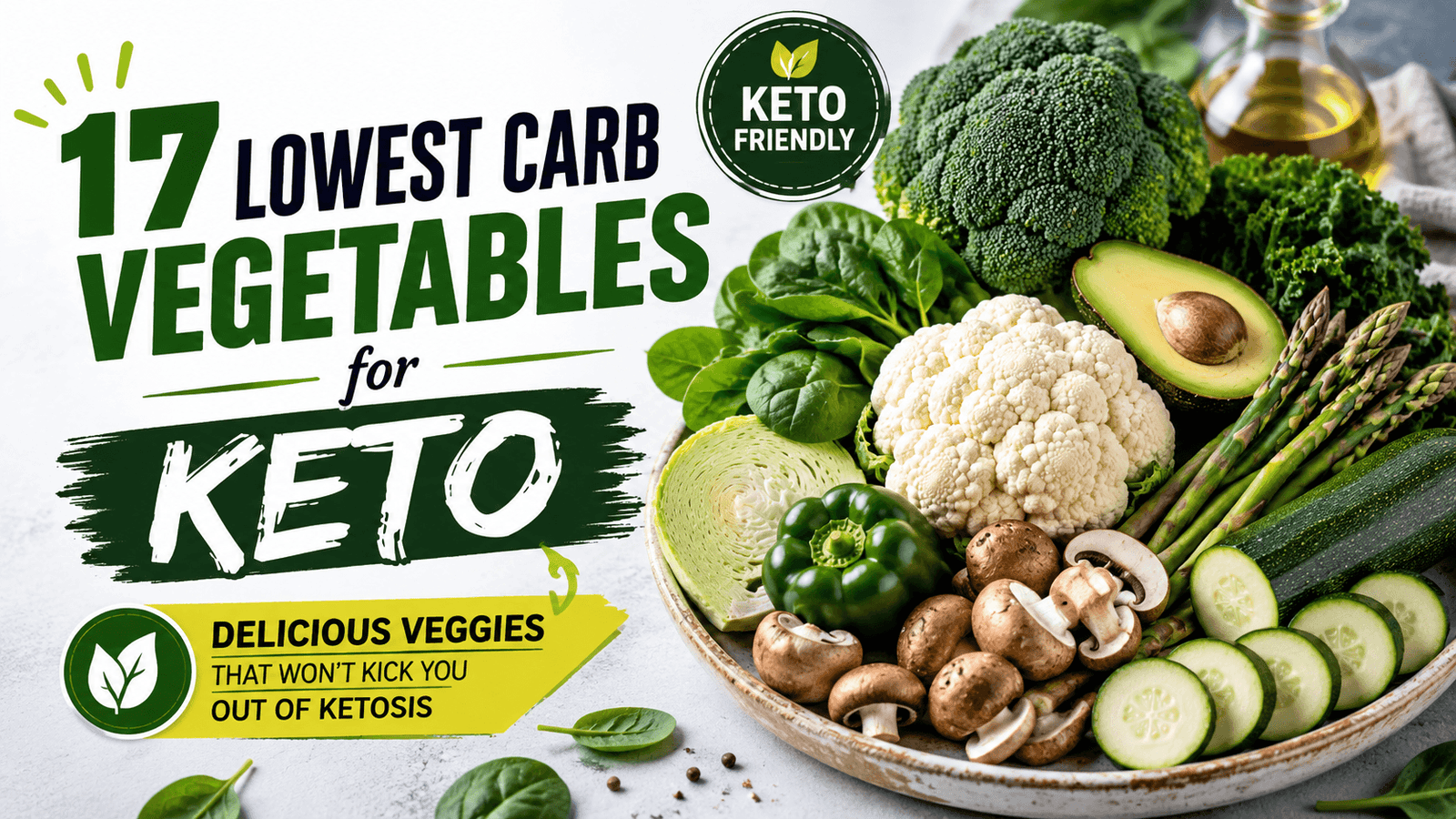
The key is knowing which vegetables are lowest in carbs and how to include them in your meals without accidentally going over your carb limit.
In this guide, we’ll explore 17 of the lowest carb vegetables for keto, including leafy greens, cruciferous vegetables, mushrooms, zucchini, and more. We’ll also look at which vegetables you may want to limit on a low-carb diet.
What Are the Lowest Carb Vegetables?
The lowest carb vegetables are generally non-starchy vegetables that contain relatively few carbohydrates per serving. Many are also high in fiber, which makes them filling and nutritious.
When following keto, it can be helpful to look at net carbs rather than total carbohydrates.
Net carbs = Total carbs − Fiber
Because fiber isn’t fully digested by the body, net carbs are often used by people following a ketogenic diet to estimate the carbohydrates that can affect ketosis.
However, serving size still matters. Eating large amounts of even low-carb vegetables can add up.
17 Lowest Carb Vegetables for Keto
1. Spinach
Spinach is one of the easiest low-carb vegetables to add to a keto meal. It contains very few carbohydrates while providing nutrients such as vitamin A, vitamin K, folate, and iron.
Add fresh spinach to omelets, salads, soups, or keto smoothies. You can also sauté it with butter, garlic, and herbs for a simple side dish.
2. Lettuce
Lettuce is an excellent choice when you want volume without adding many carbohydrates to your meal.
Romaine, green leaf, and butter lettuce can all work well in a keto diet. Use large lettuce leaves instead of bread or tortillas for burgers, wraps, and sandwiches.
3. Zucchini
Zucchini is one of the most versatile low-carb vegetables. It can be grilled, roasted, sautéed, or spiralized into keto-friendly “zoodles.”
Zucchini also works beautifully in casseroles and soups. Its mild flavor makes it easy to pair with cheese, meat, herbs, and healthy fats.
4. Cauliflower
Cauliflower is a keto favorite because it can replace several higher-carb foods.
You can turn cauliflower into mashed “potatoes,” cauliflower rice, pizza crust, or even creamy soup. It’s also a great source of vitamin C and other nutrients.
5. Broccoli
Broccoli provides fiber, vitamin C, vitamin K, and other beneficial nutrients while remaining relatively low in carbohydrates.
Steam or roast broccoli and serve it with grilled chicken, steak, salmon, or cheese. For extra flavor, drizzle it with olive oil and add garlic or Parmesan.
6. Cucumber
Cucumber is refreshing, crunchy, and relatively low in carbohydrates. It is especially useful for salads, snacks, and refreshing keto side dishes.
Try cucumber slices with cream cheese or a low-carb dip, or combine cucumber with avocado and herbs for a simple salad.
7. Mushrooms
Mushrooms are another excellent addition to a keto meal. They have a savory, satisfying flavor and can be cooked in many different ways.
Sauté mushrooms with butter and garlic, add them to omelets, or use them as a topping for steak, burgers, and chicken.
8. Cabbage
Cabbage is affordable, filling, and versatile. It can be shredded into salads, sautéed as a side dish, or used in keto-friendly stir-fries.
Green and red cabbage can both fit into a low-carb lifestyle when eaten in reasonable portions.
9. Asparagus
Asparagus is a nutritious vegetable that pairs particularly well with keto meals. Roast it with olive oil, salt, pepper, and garlic for an easy side dish.
You can also wrap asparagus with bacon or serve it alongside eggs, chicken, or grilled fish.
10. Green Beans
Green beans can fit into many low-carb and keto meal plans. They offer fiber and several vitamins while providing a satisfying texture.
Try roasted green beans with garlic, sautéed green beans with butter, or a creamy keto green bean casserole.
11. Bell Peppers
Bell peppers add color, crunch, and flavor to keto meals. While they contain more carbohydrates than leafy greens, reasonable portions can still fit into many keto diets.
Green bell peppers generally contain fewer carbohydrates than red, yellow, and orange varieties. Use them in omelets, salads, stuffed peppers, or stir-fries.
12. Celery
Celery is naturally low in carbohydrates and contains a high amount of water, making it a popular choice for low-carb snacks.
Spread celery sticks with cream cheese, peanut butter without added sugar, or another keto-friendly dip.
13. Kale
Kale is a nutrient-dense leafy green that can add plenty of flavor and texture to keto meals.
Use fresh kale in salads, sauté it with garlic and olive oil, or turn it into crispy keto-friendly kale chips.
14. Brussels Sprouts
Brussels sprouts are part of the cruciferous vegetable family and can be included in a keto diet when portion sizes are appropriate.
Roasting brings out their natural flavor. Try tossing them with olive oil, garlic, Parmesan, or crispy bacon.
15. Avocado
Although botanically considered a fruit, avocado is often included in lists of keto-friendly vegetables because of its culinary use.
Avocado is relatively low in net carbs and provides fiber and healthy monounsaturated fats. Add it to salads, eggs, burgers, or keto bowls.
16. Radishes
Radishes are crunchy, slightly spicy, and surprisingly versatile. They can be eaten raw in salads or cooked as a lower-carb alternative to potatoes in certain recipes.
Try roasting radishes with olive oil, salt, pepper, and herbs for a delicious keto side dish.
17. Bok Choy
Bok choy is a leafy vegetable commonly used in Asian-inspired dishes. It’s light, crunchy, and relatively low in carbohydrates.
Add bok choy to keto stir-fries, soups, or simply sauté it with garlic and sesame oil for a quick side dish.
Lowest Carb Vegetables at a Glance
Here’s a quick list of the vegetables covered in this guide:
- Spinach
- Lettuce
- Zucchini
- Cauliflower
- Broccoli
- Cucumber
- Mushrooms
- Cabbage
- Asparagus
- Green beans
- Bell peppers
- Celery
- Kale
- Brussels sprouts
- Avocado
- Radishes
- Bok choy
The exact carbohydrate content varies by variety, preparation method, and serving size, so always check nutrition information when precise carb tracking is important.
Vegetables to Limit on Keto
Not every vegetable is equally suitable for a strict ketogenic diet. Some vegetables contain significantly more carbohydrates because they’re starchier.
Examples include:
- Potatoes
- Sweet potatoes
- Corn
- Peas
- Parsnips
- Cassava
- Large portions of carrots
You don’t necessarily have to consider these foods “bad,” but they can use up a significant portion of your daily carbohydrate allowance.
If you’re trying to maintain ketosis, focus more often on leafy greens, cruciferous vegetables, and other non-starchy options.
How to Add More Low-Carb Vegetables to Your Keto Diet
Eating the same salad every day can get boring. Fortunately, there are many easy ways to make low-carb vegetables more interesting.
Start your day with vegetables: Add spinach, mushrooms, or bell peppers to eggs or an omelet.
Replace high-carb sides: Try cauliflower rice instead of regular rice or zucchini noodles instead of traditional pasta.
Roast your vegetables: Roasting can bring out natural flavors and create crispy edges. Broccoli, cauliflower, asparagus, Brussels sprouts, and radishes are excellent choices.
Add healthy fats: Olive oil, avocado, butter, cheese, and other keto-friendly ingredients can make vegetables more satisfying.
Make vegetable-based snacks: Cucumber, celery, radishes, and bell peppers can be paired with keto-friendly dips.
How Many Vegetables Can You Eat on Keto?
There isn’t one universal amount of vegetables that works for everyone on keto. Your ideal intake depends on your individual carbohydrate target, overall diet, activity level, and portion sizes.
Instead of completely avoiding vegetables, prioritize non-starchy, low-carb vegetables and keep track of your portions if you’re following a strict carb limit.
Remember that vegetables provide fiber and important micronutrients, so eliminating them unnecessarily isn’t usually the goal of a well-planned keto diet.
Frequently Asked Questions
What is the lowest carb vegetable?
Leafy greens such as spinach and lettuce are among the lowest-carb vegetable choices. Other good options include cucumber, celery, zucchini, and cauliflower.
Can I eat vegetables every day on keto?
Yes. Many vegetables can be enjoyed daily on a keto diet. Focus primarily on non-starchy vegetables and pay attention to portion sizes and your overall carbohydrate intake.
What vegetables should I avoid on keto?
For a strict keto diet, you may want to limit higher-carb and starchy vegetables such as potatoes, sweet potatoes, corn, and cassava.
Are carrots keto-friendly?
Small portions of carrots can fit into some low-carb diets, but they contain more carbohydrates than many leafy greens and other non-starchy vegetables. If you’re following strict keto, measure your portion and account for the carbs in your daily total.
Is cauliflower good for keto?
Yes. Cauliflower is one of the most versatile vegetables for keto. It can be used to make cauliflower rice, mashed cauliflower, soups, casseroles, and other low-carb dishes.
Final Thoughts
You don’t need to give up vegetables to follow a keto lifestyle. The secret is choosing vegetables that provide plenty of nutrition without adding excessive carbohydrates to your daily intake.
From spinach and lettuce to cauliflower, zucchini, broccoli, mushrooms, and asparagus, there are plenty of delicious choices.
Keep portions in mind, prioritize non-starchy vegetables, and experiment with different cooking methods and seasonings. With the right choices, vegetables can make your keto meals more flavorful, colorful, satisfying, and nutritious.
Important: Nutritional values can vary depending on the vegetable variety, serving size, and preparation method. If you have a medical condition or specific dietary requirements, consult a qualified healthcare professional or registered dietitian before making major dietary changes.