Following a keto diet can feel confusing when you’re trying to eat enough healthy fat without accidentally going over your daily carb limit. The good news is that there are plenty of delicious, satisfying, and naturally low-carb foods that can help you get the fat your body needs while keeping carbs under control.
Whether you’re new to keto or simply looking for more variety in your meals, knowing which high-fat keto foods won’t break your carb limit can make meal planning much easier.
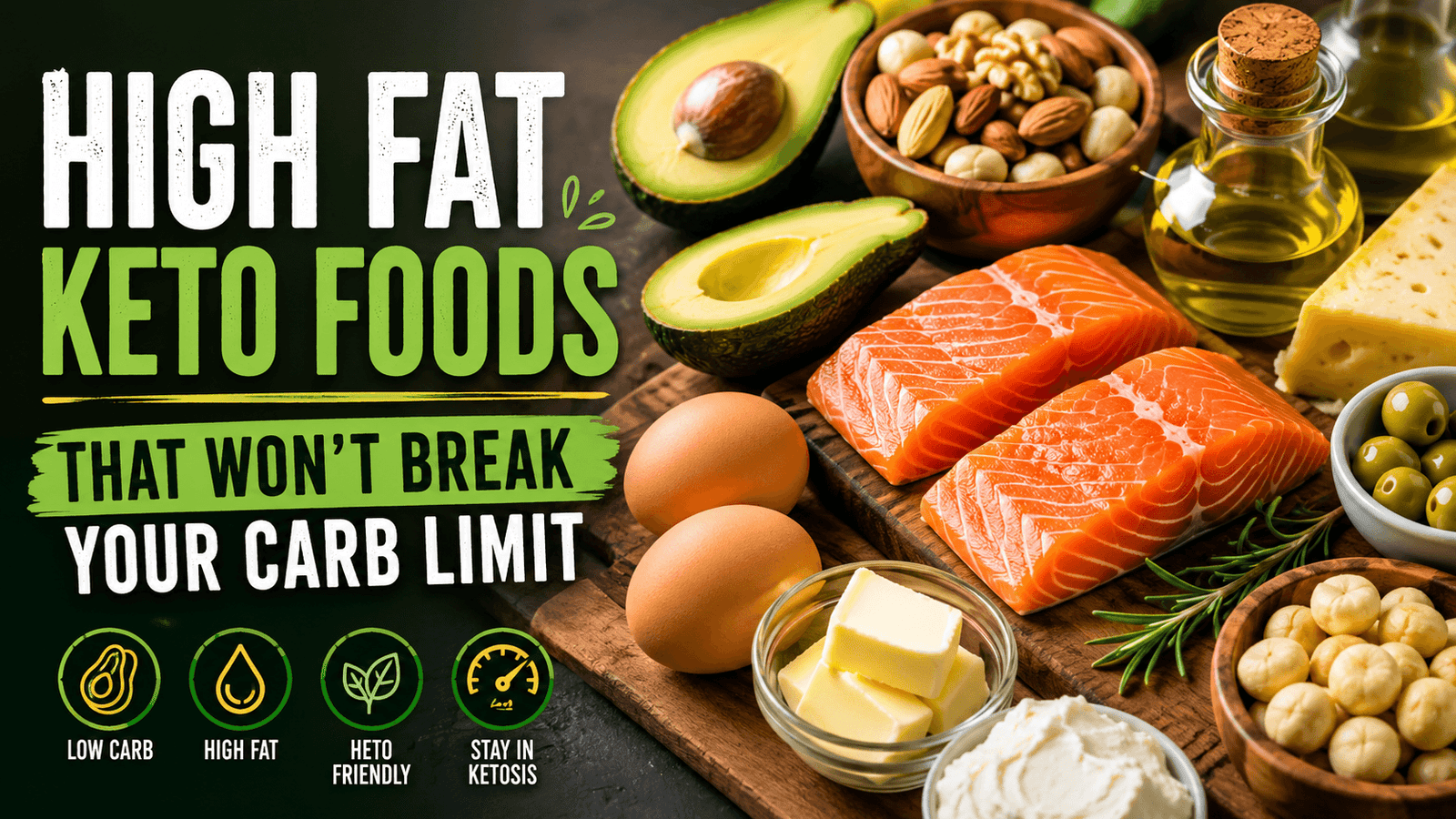
From creamy avocados and eggs to olive oil, fatty fish, cheese, and nuts, there are many options that fit beautifully into a low-carb lifestyle.
In this guide, we’ll look at some of the best high-fat keto foods, how to use them in everyday meals, and a few common mistakes to avoid.
What Makes a Food Keto-Friendly?
The ketogenic diet is a low-carbohydrate, higher-fat eating pattern. The goal is generally to reduce carbohydrate intake enough that the body can enter and maintain a metabolic state called ketosis.
However, “high fat” doesn’t automatically mean “keto-friendly.”
Some foods can contain significant amounts of fat while also providing enough carbohydrates to quickly add up throughout the day. Portion sizes matter, particularly with foods such as nuts, dairy products, and certain vegetables.
The best choices are foods that provide healthy fats while keeping carbohydrates relatively low.
Here are some of the best options to consider.
1. Avocados
Avocados are one of the most popular foods for people following a keto diet.
They contain mostly monounsaturated fat and are naturally low in carbohydrates relative to their fiber content. They’re also a good source of fiber and provide nutrients such as potassium.
You can enjoy avocado in many ways:
- Add sliced avocado to eggs.
- Make a simple guacamole.
- Add avocado to salads.
- Blend it into a creamy smoothie.
- Use mashed avocado as a spread.
Because avocados are calorie-dense, you don’t necessarily need a huge serving to make your meal more satisfying.
2. Eggs
Eggs are an incredibly versatile keto staple.
A large egg provides fat and protein with very few carbohydrates, making eggs an easy addition to a low-carb meal.
Try scrambled eggs cooked in butter, an omelet filled with cheese and vegetables, or hard-boiled eggs as a quick snack.
Eggs are especially useful when you need a simple breakfast that doesn’t require complicated preparation.
3. Extra-Virgin Olive Oil
Extra-virgin olive oil is an easy way to increase the fat content of a keto meal without adding significant carbohydrates.
Drizzle it over salads, roasted vegetables, grilled meats, or cooked fish. You can also use it as the base for homemade salad dressings.
A simple keto dressing can be made with olive oil, lemon juice, salt, pepper, and your favorite herbs.
Just remember that oils are calorie-dense, so use an amount that fits your overall dietary needs.
4. Fatty Fish
Fatty fish can be an excellent choice when you’re looking for foods that provide both fat and protein.
Examples include:
- Salmon
- Sardines
- Mackerel
- Trout
- Herring
These fish are also well known for providing omega-3 fatty acids.
Try baked salmon with roasted low-carb vegetables for a simple keto-friendly dinner. Sardines can also be added to salads or eaten as a quick protein-rich snack.
5. Cheese
Many types of cheese can fit into a ketogenic eating pattern because they provide fat and protein with relatively little carbohydrate.
Good options include cheddar, mozzarella, cream cheese, brie, goat cheese, and Parmesan.
Cheese can be used to make keto meals more satisfying. Add shredded cheese to omelets, sprinkle Parmesan over vegetables, or use cream cheese in low-carb recipes.
However, check nutrition labels when possible because carbohydrate amounts vary between products.
6. Butter and Ghee
Butter and ghee contain virtually no carbohydrates and can add richness to many keto dishes.
Use them for cooking eggs, sautéing low-carb vegetables, or adding flavor to meat and seafood.
Ghee is clarified butter, meaning the milk solids have been removed. It has a rich flavor and is commonly used in cooking.
Although butter and ghee can fit into keto meals, they are still concentrated sources of calories, so portion awareness is important.
7. Olives
Olives are another convenient keto-friendly food.
They provide fat and flavor while generally containing only a small amount of carbohydrates per serving.
You can add olives to salads, serve them alongside cheese, or use them in Mediterranean-inspired keto recipes.
Keep an eye on portion sizes and sodium if you’re eating large amounts of packaged or brined olives.
8. Macadamia Nuts
If you’re looking for a crunchy keto snack, macadamia nuts are worth considering.
They’re relatively high in fat and lower in carbohydrates than many other nuts, making them a popular choice among people following low-carb diets.
Enjoy a small handful as a snack or chop them and sprinkle them over a salad.
The key word here is small. Nuts are easy to overeat because they’re compact and calorie-dense.
9. Chia Seeds
Chia seeds may be tiny, but they can be a useful ingredient in keto recipes.
They contain fiber, fat, and a modest amount of protein. Because much of their carbohydrate content comes from fiber, their net-carb contribution can be relatively low.
Try making chia pudding with unsweetened almond milk and a keto-friendly sweetener. You can also add chia seeds to smoothies or sprinkle them over Greek yogurt.
10. Full-Fat Greek Yogurt
Unsweetened full-fat Greek yogurt can sometimes fit into a keto meal plan, depending on your individual carbohydrate target and portion size.
It’s a convenient source of fat and protein and works particularly well for breakfast or snacks.
Choose plain, unsweetened varieties and check the nutrition label. Flavored yogurts can contain added sugars and significantly more carbohydrates.
For extra flavor, add a few berries, chia seeds, cinnamon, or chopped nuts.
11. Coconut and Coconut Products
Coconut can be a useful ingredient in low-carb cooking.
Unsweetened coconut cream, coconut milk, and shredded coconut can add richness and fat to keto recipes.
Coconut cream works particularly well in curries, soups, and keto desserts. Unsweetened shredded coconut can also be used in homemade energy bites or low-carb baked goods.
Always look for unsweetened products because some packaged coconut products contain added sugar.
12. Mayonnaise
Mayonnaise can add plenty of fat to keto meals with very little carbohydrate, depending on the product.
It’s especially useful for tuna salad, egg salad, chicken salad, and keto-friendly sauces.
When shopping, read the ingredient list and nutrition label. Some mayonnaise products contain added sugars or oils you may prefer to avoid.
You can also make homemade mayonnaise using simple ingredients such as egg yolks and oil.
13. Pork Belly
For people who eat meat, pork belly can provide a substantial amount of fat along with protein.
It can be roasted, grilled, or incorporated into various low-carb recipes.
Because it’s very rich, you don’t need a large serving to make a meal satisfying. Pair it with non-starchy vegetables and a fresh salad for a balanced keto-friendly plate.
14. Dark Chocolate
You don’t necessarily have to give up chocolate on keto, but choosing the right type matters.
Very dark chocolate with a high cocoa percentage can contain less sugar than conventional milk chocolate. However, carbohydrates can still add up quickly.
If you enjoy dark chocolate, choose a small portion and check the nutrition label carefully.
Look for products with little or no added sugar and keep your serving within your daily carb target.
How to Avoid Breaking Your Carb Limit
Even foods considered keto-friendly can contribute to your daily carbohydrate intake. That’s why portion control and label reading are important.
Here are a few simple strategies:
Check Nutrition Labels
Don’t rely solely on the word “keto” on food packaging. Look at total carbohydrates, fiber, added sugars, and serving size.
Watch Your Portions
Nuts, cheese, avocado, and dark chocolate can all fit into keto eating, but eating large amounts can increase your total calorie and carbohydrate intake.
Choose Whole Foods More Often
Build your meals around foods such as eggs, fish, meat, avocados, olives, and low-carb vegetables.
Be Careful With Sauces
Ketchup, barbecue sauce, sweet dressings, and some packaged marinades can contain surprisingly large amounts of added sugar.
Track Your Daily Intake
If you’re trying to stay within a specific carbohydrate target, tracking what you eat can help you understand where hidden carbs are coming from.
What High-Fat Keto Foods Should You Limit?
Not every high-fat food is automatically a great choice for a keto diet.
Some foods are high in both fat and carbohydrates. Examples include:
- Sugary peanut butter
- Sweetened yogurt
- Milk chocolate
- Ice cream
- Sugar-filled sauces
- Sweetened coconut products
- Pastries and baked goods
- Many packaged “low-carb” snacks with added ingredients
The goal isn’t simply to eat as much fat as possible. A well-planned keto diet should emphasize nutrient-dense foods while keeping carbohydrate intake appropriate for your individual goals.
Easy High-Fat Keto Meal Ideas
Need some inspiration? Try these simple combinations:
Breakfast: Scrambled eggs with cheese, avocado, and sautéed spinach.
Lunch: Grilled chicken salad with avocado, olives, cheese, and olive-oil dressing.
Dinner: Baked salmon with butter and roasted broccoli.
Snack: A small serving of macadamia nuts with cheese.
Dessert: Unsweetened Greek yogurt with chia seeds and a small amount of berries.
These combinations can help you build satisfying meals without relying heavily on processed keto products.
Final Thoughts
Finding high fat keto foods that won’t break your carb limit doesn’t have to be difficult. The key is choosing naturally low-carb foods, paying attention to serving sizes, and checking nutrition labels when you’re unsure.
Avocados, eggs, olive oil, fatty fish, cheese, olives, macadamia nuts, chia seeds, and unsweetened full-fat dairy can all be useful additions to a keto-friendly meal plan.
Most importantly, don’t assume that eating more fat automatically makes a diet healthier or more effective. Your overall calorie intake, protein intake, carbohydrate target, food quality, and individual health needs all matter.
If you’re following keto for a specific medical reason or have a medical condition, consider speaking with a qualified healthcare professional or registered dietitian before making significant dietary changes.