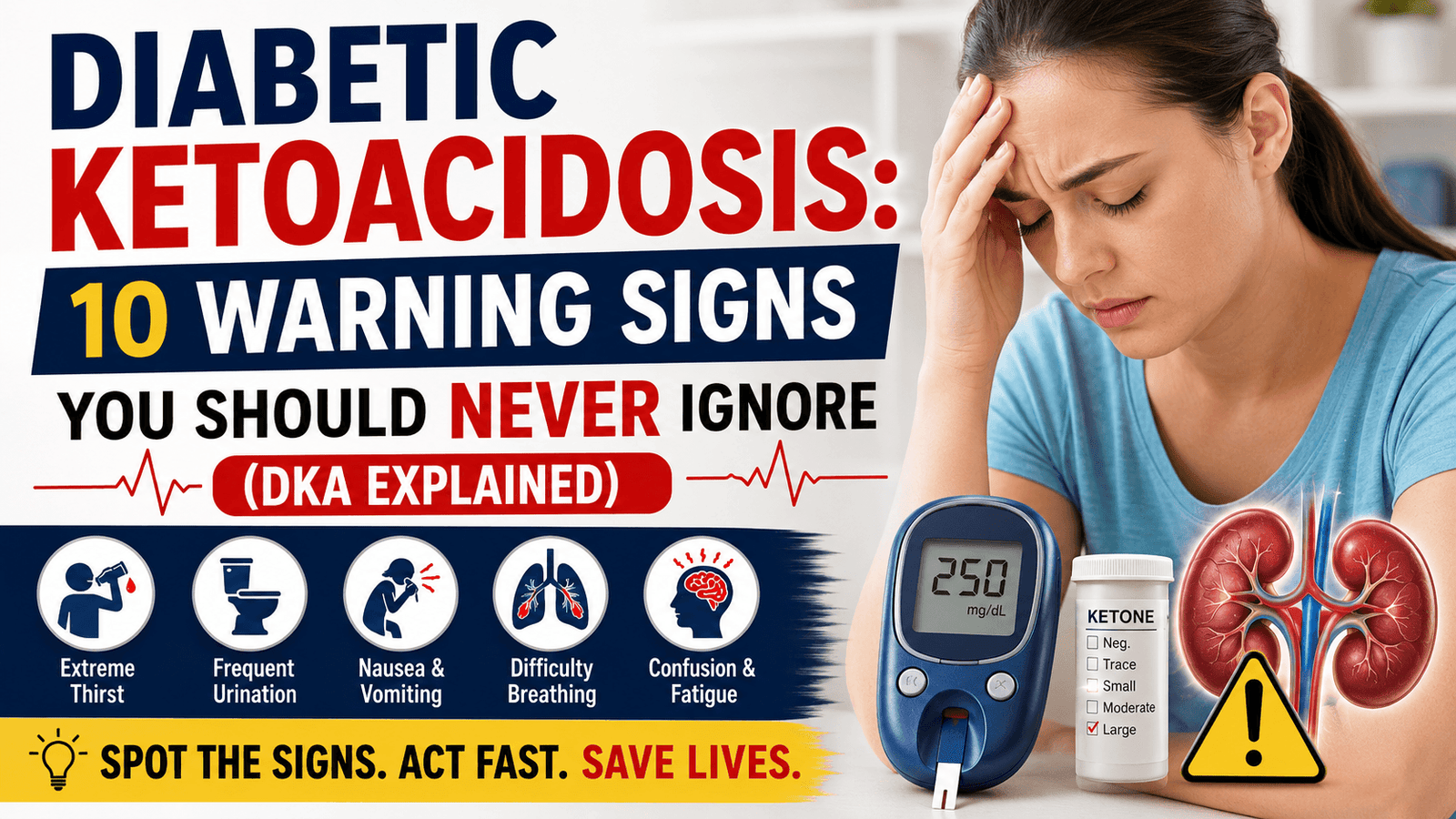
Diabetic ketoacidosis, commonly called DKA, is a serious complication of diabetes that can develop when the body does not have enough insulin. It causes the body to break down fat rapidly, producing ketones that can build up in the blood and make it dangerously acidic.
Although the word “keto” is part of both ketosis and diabetic ketoacidosis, these are not the same thing. Nutritional ketosis can occur when someone follows a ketogenic diet and intentionally reduces carbohydrates. DKA, on the other hand, is a medical emergency associated with insufficient insulin and metabolic imbalance.
Knowing the warning signs of diabetic ketoacidosis can be extremely important, particularly for people with diabetes. DKA occurs more commonly in people with type 1 diabetes, although it can also occur in people with type 2 diabetes.
Important: DKA can become life-threatening and requires urgent medical treatment. If you suspect you or someone else may have DKA, seek emergency medical care rather than trying to treat it with diet or home remedies.
What Is Diabetic Ketoacidosis?
Diabetic ketoacidosis is a dangerous metabolic condition caused by insufficient insulin.
Normally, insulin helps glucose move from the bloodstream into cells, where it can be used for energy. When there is not enough insulin, the body may begin breaking down fat for energy instead.
This process produces chemicals called ketones. When ketones accumulate faster than the body can safely handle them, the blood becomes acidic, resulting in ketoacidosis.
High blood glucose can also cause increased urination and fluid loss, contributing to dehydration.
DKA may develop quickly, so recognizing the symptoms is important.
10 Warning Signs of Diabetic Ketoacidosis
1. Excessive Thirst
One of the early warning signs can be intense thirst.
When blood glucose becomes very high, the kidneys attempt to remove excess glucose through urine. This can increase fluid loss and leave you dehydrated, making you feel unusually thirsty.
If excessive thirst occurs together with other DKA symptoms, particularly frequent urination or vomiting, it should not be ignored.
2. Frequent Urination
Another common warning sign is urinating much more frequently than usual.
High blood glucose can cause the kidneys to excrete more glucose into the urine. Water follows the glucose, increasing urine production and contributing to dehydration.
Frequent urination by itself does not prove that someone has DKA, but when it occurs alongside high blood glucose, ketones, nausea, or other symptoms, medical attention may be necessary.
3. Nausea and Vomiting
Nausea and vomiting are important symptoms of DKA.
As the condition progresses, the buildup of ketones and metabolic disturbances can make a person feel increasingly sick. Persistent vomiting can also worsen dehydration.
If someone with diabetes has unexplained vomiting along with high glucose or ketones, DKA should be considered and urgent medical advice should be sought.
4. Abdominal Pain
Abdominal discomfort or pain can occur during diabetic ketoacidosis.
This symptom can be particularly concerning when it appears together with nausea, vomiting, dehydration, or other signs of DKA.
Because abdominal pain has many possible causes, it cannot diagnose DKA by itself. However, someone with diabetes experiencing abdominal pain alongside several DKA warning signs should seek medical evaluation promptly.
5. Fruity-Smelling Breath
A distinctive fruity or sweet-smelling breath can occur when ketones accumulate.
Some ketones are volatile and can be released through the lungs. This can produce an unusual fruity odor on the breath.
This is a classic warning sign associated with ketoacidosis, but you should not wait for fruity breath before seeking help if other DKA symptoms are already present.
6. Deep or Difficult Breathing
Changes in breathing can be another serious warning sign.
As the body becomes more acidic, breathing may become deeper or more labored as the body attempts to compensate for the metabolic imbalance.
Difficulty breathing should always be taken seriously. When it occurs with diabetes, high blood glucose, ketones, vomiting, confusion, or fruity-smelling breath, emergency medical evaluation is warranted.
7. Extreme Tiredness or Weakness
Severe fatigue or weakness can occur during DKA.
When the body’s cells cannot effectively use glucose for energy because of insufficient insulin, a person may feel profoundly tired or weak.
Fatigue is a nonspecific symptom, meaning many conditions can cause it. However, extreme weakness combined with other DKA symptoms can be a sign of a serious metabolic problem.
8. Dry Mouth and Dehydration
DKA can cause significant fluid loss.
Frequent urination can cause the body to lose water and electrolytes. As dehydration progresses, a person may experience a very dry mouth, intense thirst, dry skin, weakness, and other symptoms.
Severe dehydration can make DKA more dangerous, which is why suspected DKA requires professional medical treatment rather than simply trying to correct the situation through diet.
9. Confusion or Changes in Alertness
Confusion, unusual drowsiness, or changes in mental alertness are serious warning signs.
As DKA becomes more severe, metabolic disturbances and dehydration can affect the brain and overall level of consciousness.
If someone with diabetes becomes confused, extremely sleepy, difficult to wake, or otherwise behaves unusually, seek emergency medical care immediately.
10. High Blood Glucose and Elevated Ketones
High blood glucose and elevated ketones can be important clues that DKA may be developing.
However, a single blood glucose reading cannot diagnose or rule out DKA. DKA involves a combination of metabolic abnormalities, including ketone accumulation and acidosis.
People with diabetes who have been instructed by their healthcare professional to monitor ketones should follow their individualized sick-day and ketone-testing plan.
If high ketones occur together with symptoms such as vomiting, abdominal pain, difficulty breathing, or confusion, urgent medical evaluation is especially important.
What Can Cause Diabetic Ketoacidosis?
The underlying problem in DKA is insufficient effective insulin.
Several situations can contribute to DKA, including:
- Missing or not receiving enough insulin
- Insulin pump problems or interruptions
- Infection or another serious illness
- Significant dehydration
- Physical stress from illness or surgery
- Previously undiagnosed diabetes
- Certain medications or medical conditions
In people with established diabetes, infections and inadequate insulin are among the important triggers.
Importantly, DKA can sometimes be the first sign of diabetes, meaning a person may develop it before knowing they have diabetes.
Is Diabetic Ketoacidosis the Same as Keto Diet Ketosis?
No.
This is one of the most important points for anyone interested in the ketogenic diet.
Nutritional Ketosis
When carbohydrate intake is significantly reduced, the body can begin using more fat for fuel and producing ketones. This is known as nutritional ketosis.
For many people, nutritional ketosis is an intended metabolic state associated with ketogenic eating.
Diabetic Ketoacidosis
DKA is completely different. It occurs when there is insufficient insulin and ketones accumulate along with metabolic acidosis.
Therefore, simply finding ketones in the body does not automatically mean someone has diabetic ketoacidosis.
People with diabetes—especially those using insulin—should discuss ketogenic diets with their healthcare professional before making major dietary changes.
Can a Keto Diet Cause Diabetic Ketoacidosis?
A ketogenic diet and DKA should not be treated as interchangeable concepts.
A person following a keto diet may have measurable ketones because carbohydrate intake is low. That does not automatically mean DKA.
However, people with diabetes have additional considerations because insulin availability and blood glucose regulation are central to DKA risk. A very-low-carbohydrate diet may also complicate interpretation of ketone readings for someone with diabetes.
If you have diabetes and are considering a ketogenic diet, talk with your doctor or diabetes care team first. Your medications, insulin requirements, glucose monitoring, and individual health circumstances all matter.
Never stop or significantly change prescribed insulin simply because you are eating fewer carbohydrates unless your healthcare professional specifically instructs you to do so.
What Should You Do If You Suspect DKA?
Suspected diabetic ketoacidosis is not something to manage with a keto recipe, fasting, supplements, or other home remedies.
If you have diabetes and develop symptoms that could indicate DKA—especially vomiting, abdominal pain, difficulty breathing, confusion, severe weakness, or high ketones—seek urgent medical care.
Follow the sick-day and ketone-monitoring instructions provided by your healthcare team. If symptoms are severe or you are becoming confused, very drowsy, or having difficulty breathing, seek emergency medical attention immediately.
Treatment for DKA generally requires medical monitoring and correction of the underlying metabolic problems, which may include insulin, fluids, and electrolyte management.
Who Is Most at Risk?
DKA is more common among people with type 1 diabetes, but it can also occur in people with type 2 diabetes. It may happen when insulin levels are inadequate during illness or other stressful situations.
People using insulin should have a clear plan for what to do when they are sick, particularly regarding glucose and ketone monitoring and when to seek medical care.
Final Thoughts
Diabetic ketoacidosis is a serious condition that everyone with diabetes should understand.
The most important warning signs include excessive thirst, frequent urination, nausea, vomiting, abdominal pain, fruity-smelling breath, unusual breathing, severe weakness, dehydration, confusion, and elevated glucose or ketones.
Most importantly, remember that nutritional ketosis and diabetic ketoacidosis are not the same thing. Ketosis can be a normal metabolic response to carbohydrate restriction, while DKA is a potentially life-threatening medical emergency caused by inadequate insulin and metabolic imbalance.
If you have diabetes and suspect DKA, don’t try to solve the problem through diet alone. Contact your healthcare provider or seek emergency medical care.
Medical Disclaimer
This article is intended for general educational and informational purposes only. It is not medical advice, diagnosis, or treatment. Diabetic ketoacidosis can be life-threatening. If you suspect DKA or are experiencing severe symptoms, seek urgent medical attention. Always follow the individualized diabetes-management and sick-day instructions provided by your healthcare professional.