Losing weight can feel overwhelming, especially when you have a specific goal in mind. If you’re considering the keto diet, you may be wondering: Can I lose 30lbs in 3 months on keto?
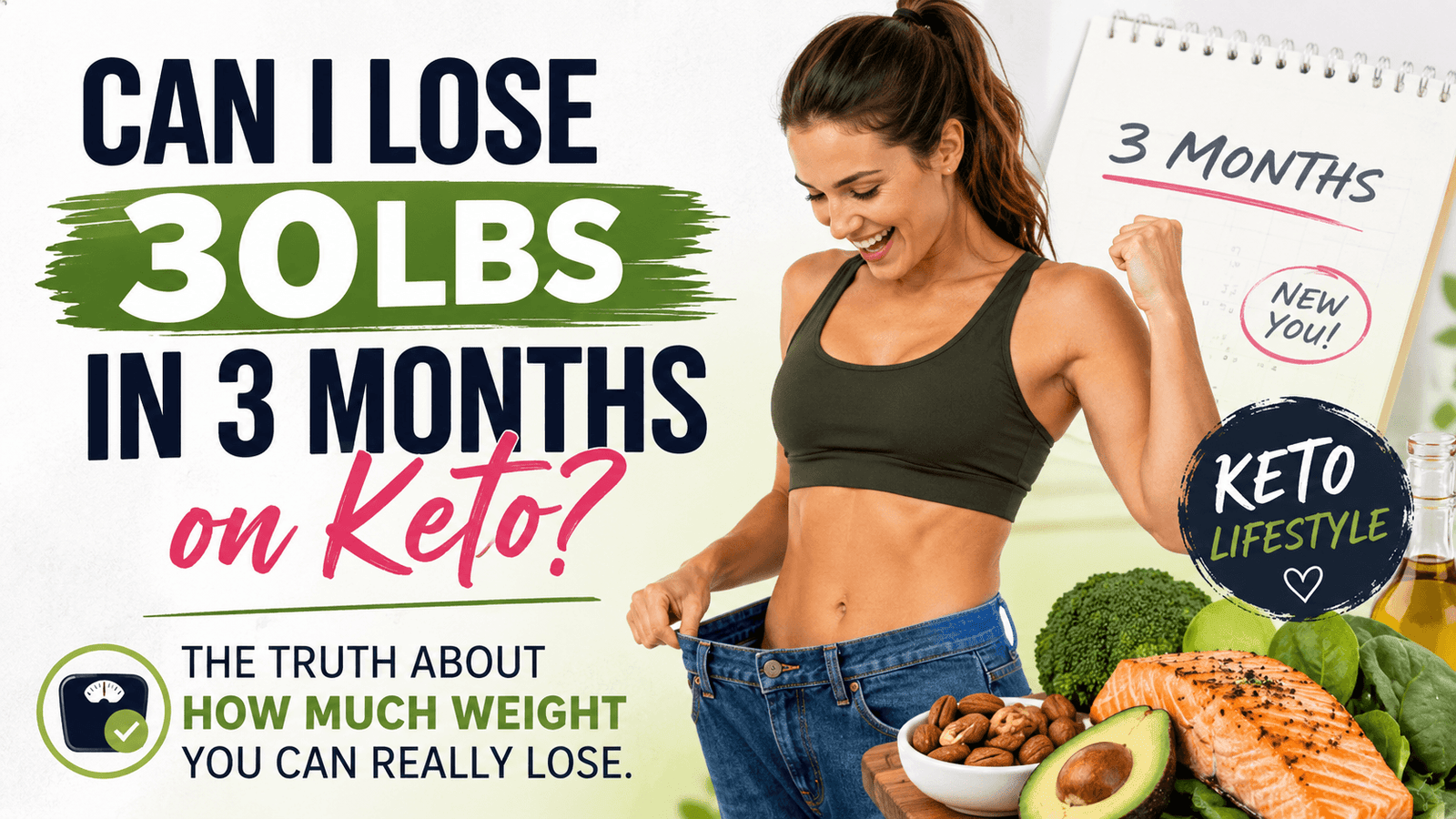
The short answer is that some people may be able to lose 30 pounds in three months, but it isn’t a guaranteed or realistic target for everyone. Weight loss depends on factors such as your starting weight, calorie intake, activity level, adherence to the diet, sleep, age, and individual metabolism.
A 30-pound goal over approximately 12 weeks works out to about 2.5 pounds per week. For many people, that is an aggressive pace. A more sustainable approach is usually to focus on consistent habits and gradual weight loss rather than trying to reach a specific number as quickly as possible.
Let’s look at what you can realistically expect from keto over three months.
What Is the Keto Diet?
The ketogenic, or keto, diet is a low-carbohydrate, higher-fat eating pattern designed to shift the body toward using more fat and ketones for energy.
A typical keto diet significantly reduces carbohydrate intake while emphasizing foods such as:
- Eggs
- Meat and poultry
- Fish and seafood
- Avocados
- Olive oil
- Nuts and seeds
- Cheese and other low-carb dairy
- Non-starchy vegetables
When carbohydrate intake is greatly reduced, the body can enter a metabolic state called ketosis, in which it produces ketones from fat to use as an alternative fuel source.
Keto can help some people lose weight because it may reduce appetite, limit highly processed carbohydrate-rich foods, and make it easier for some individuals to maintain a calorie deficit.
Can I Lose 30lbs in 3 Months on Keto?
So, can I lose 30lbs in 3 months on keto?
Potentially, yes—but it depends heavily on your individual circumstances.
Losing 30 pounds in three months means averaging approximately 2.5 pounds per week. Someone with a higher starting body weight may lose weight more quickly initially, while someone who is already relatively lean may lose weight much more slowly.
It’s also important to understand that the scale may move faster during the first few weeks of keto because reducing carbohydrates can cause the body to release stored glycogen and associated water.
That early drop should not be confused with losing 2–3 pounds of body fat every week.
For this reason, it’s better to think about your three-month keto journey as a period for building sustainable habits rather than guaranteeing a specific amount of weight loss.
Why Does Keto Cause Fast Weight Loss at First?
One reason keto can produce an impressive change on the scale during the first few weeks is water loss.
Your body stores carbohydrates as glycogen. Glycogen is stored with water, so when carbohydrate intake decreases, glycogen stores can decline and some of that associated water is released.
This can make the scale drop quickly.
However, after the initial water-weight change, weight loss generally becomes slower and more dependent on your overall energy intake, activity, and consistency.
That’s why comparing your first week of keto with your eighth or twelfth week isn’t always useful.
What Affects How Much Weight You Lose?
Everyone responds differently to a weight-loss diet. Several factors can influence your results.
1. Starting Weight
People with a higher starting weight may initially lose more pounds than someone who has less weight to lose.
For example, a person starting at a significantly higher body weight may see a larger numerical change on the scale than someone who is already close to their healthy weight range.
2. Calorie Intake
Keto foods can be nutritious and filling, but they can also be calorie-dense.
Foods such as cheese, nuts, butter, cream, and oils can add calories quickly.
Being on keto doesn’t automatically guarantee weight loss. Your overall energy intake still matters.
3. Protein Intake
Adequate protein can help support muscle maintenance during weight loss and may also improve fullness.
Good keto-friendly protein sources include eggs, chicken, turkey, fish, seafood, leaner cuts of meat, and other protein-rich foods that fit your dietary needs.
4. Physical Activity
Exercise isn’t mandatory for weight loss, but regular movement can support your overall health and help you maintain muscle and fitness.
A combination of walking, resistance training, and other enjoyable physical activities can be a useful part of a long-term weight-management strategy.
5. Sleep and Stress
Weight management isn’t only about food.
Poor sleep and high stress can make it harder to maintain healthy eating habits and may influence hunger, cravings, energy, and daily activity.
Aim to build a consistent sleep routine and find practical ways to manage stress.
What Could a 3-Month Keto Journey Look Like?
Instead of focusing entirely on the number 30, consider what a realistic three-month journey could look like.
Month 1: Adaptation and Habit Building
The first month may include a noticeable change on the scale, particularly during the early weeks.
Your main goal should be learning how to consistently eat lower-carb meals, control portions, drink enough fluids, and establish sustainable routines.
Don’t panic if the rate of weight loss changes after the first couple of weeks.
Month 2: Consistency
By the second month, the initial water-weight change may have slowed.
This is where consistency becomes particularly important.
Focus on balanced keto meals, adequate protein, plenty of low-carb vegetables, regular movement, and an overall eating pattern you can maintain.
Month 3: Long-Term Progress
By the third month, you should be thinking beyond the scale.
Are your eating habits easier to maintain? Are you more active? Are your clothes fitting differently? Are you making better food choices?
These improvements matter even if the scale doesn’t reach exactly 30 pounds.
How to Make Keto More Sustainable
If your goal is weight loss, you don’t need to make your diet unnecessarily complicated.
Try these practical strategies:
Prioritize Whole Foods
Build most meals around minimally processed foods such as protein, vegetables, healthy fats, and other foods that fit your nutritional needs.
Watch Portion Sizes
Keto-friendly doesn’t mean calorie-free.
Pay attention to portions of calorie-dense foods such as oils, nuts, cheese, and sauces.
Plan Your Meals
Meal planning can reduce the temptation to reach for high-carb convenience foods when you’re hungry.
Prepare a few simple keto-friendly meals in advance so you always have something available.
Drink Enough Fluids
Hydration is important, particularly during the early stages of carbohydrate restriction.
Your individual fluid and electrolyte needs can vary, so listen to your body and discuss specific concerns with a healthcare professional.
Don’t Chase the Scale Every Day
Daily weight can fluctuate because of water, food volume, sodium, hormones, and other factors.
Instead of focusing on one day’s number, look at longer-term trends.
What If I Don’t Lose 30 Pounds?
Not reaching 30 pounds after three months doesn’t mean keto failed.
Your progress may be slower than someone else’s for perfectly normal reasons.
Instead of asking only, “How many pounds did I lose?” consider:
- Did I become more consistent with my meals?
- Am I eating fewer highly processed foods?
- Have my portions improved?
- Am I more physically active?
- Are my clothes fitting differently?
- Can I maintain these habits long term?
A sustainable 15- or 20-pound loss may ultimately be more valuable than reaching 30 pounds quickly and then regaining it.
Is Losing 30 Pounds in 3 Months Safe?
For many people, attempting to lose 30 pounds in three months would be an aggressive goal.
A generally cited sustainable rate of weight loss is around 1–2 pounds per week, although individual recommendations can differ. People with a higher starting weight may sometimes lose more rapidly, particularly at the beginning of a weight-loss program.
If you have a significant amount of weight to lose, take medications, have an existing medical condition, are pregnant or breastfeeding, or are considering a restrictive diet, speak with a qualified healthcare professional before making major dietary changes.
The goal should be improving your health—not simply reaching the lowest possible number on the scale.
The Bottom Line
So, can I lose 30lbs in 3 months on keto?
It is possible for some people, but 30 pounds in three months should not be treated as a guaranteed or universal keto result.
Keto may help some people lose weight by reducing carbohydrate intake, increasing satiety, and making it easier to control food intake. However, results vary significantly from person to person.
Rather than chasing a specific number, focus on sustainable habits: eat nutritious foods, manage portions, prioritize protein, stay active, sleep well, and remain consistent.
If you approach your three-month keto journey with realistic expectations, the biggest win may not simply be the number on the scale it may be developing healthy habits that you can continue long after those 90 days are over.
Important: This article is for general informational purposes and is not medical advice. Individual nutritional needs and appropriate weight-loss goals vary. Consult a qualified healthcare professional for personalized guidance.