If you’re following a keto diet, you probably already know that not every “healthy” snack is necessarily keto-friendly. Nuts can be an excellent source of healthy fats, protein, fiber, vitamins, and minerals—but their carbohydrate content varies considerably from one type to another.
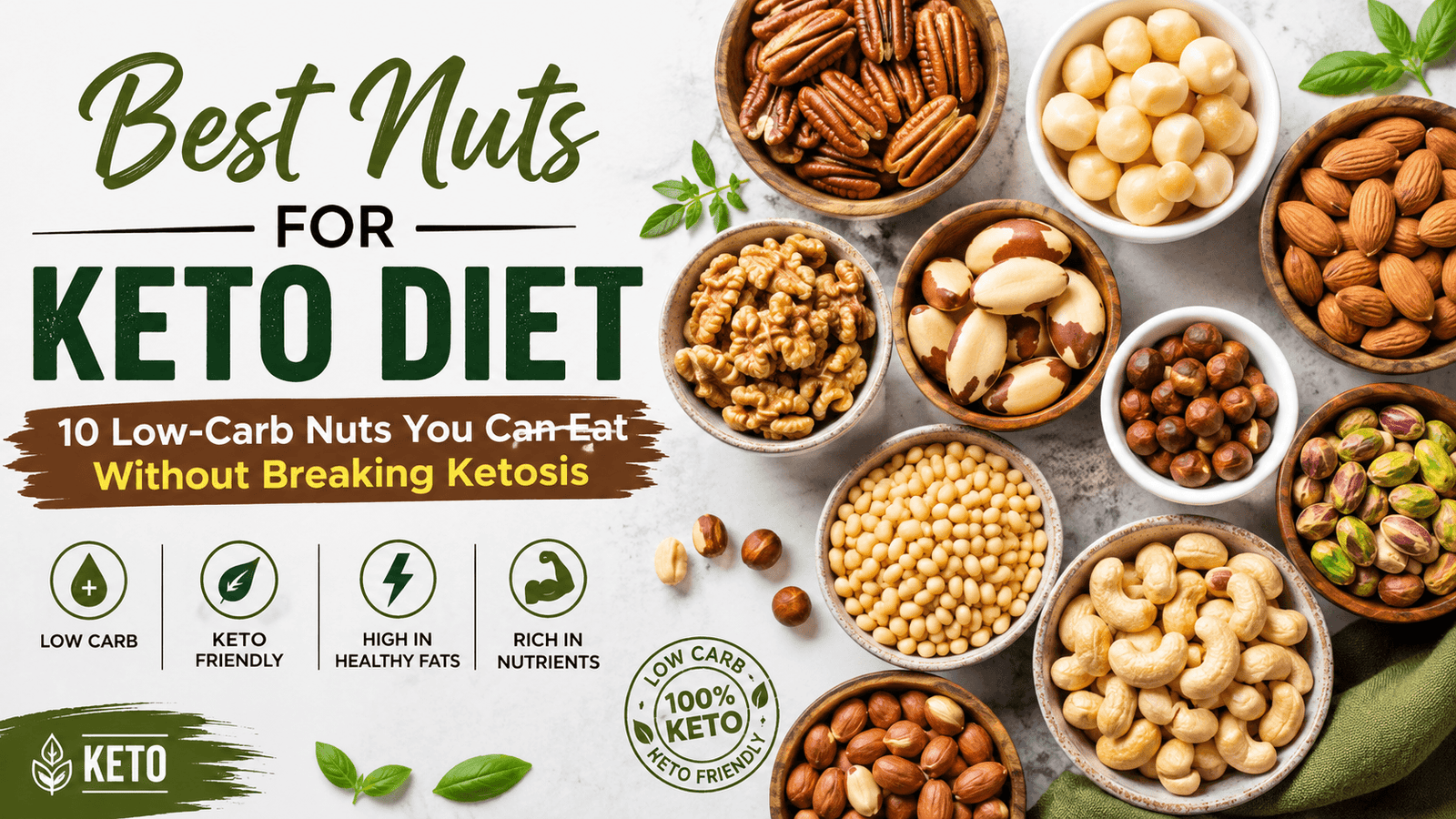
So, what are the best nuts for keto diet plans?
The good news is that you don’t have to give up crunchy, satisfying snacks when going keto. Many nuts are naturally low in net carbs and can fit comfortably into a ketogenic lifestyle when eaten in reasonable portions.
In this guide, we’ll look at 10 of the best nuts for keto, their approximate nutritional benefits, and which nuts you may want to limit if you’re trying to maintain ketosis.
Why Are Nuts Good for a Keto Diet?
Nuts can be a convenient addition to a ketogenic diet because many varieties contain a combination of healthy fats, protein, and fiber while providing relatively few net carbohydrates.
They’re also easy to carry and require little preparation, making them a practical snack when you’re hungry between meals.
Some nuts provide important nutrients such as:
- Healthy unsaturated fats
- Plant-based protein
- Dietary fiber
- Magnesium
- Vitamin E
- Antioxidants
- Copper and manganese
However, there’s one important thing to remember: nuts are calorie-dense. It’s easy to eat several handfuls without realizing how many calories you’ve consumed.
For keto, portion control still matters.
10 Best Nuts for Keto Diet
Let’s look at some of the most keto-friendly choices.
1. Macadamia Nuts
Macadamia nuts are one of the best nuts for keto diet plans.
They’re particularly popular among keto followers because they’re naturally high in fat and relatively low in carbohydrates. Their rich, buttery texture also makes them satisfying even in a small serving.
They’re a great option for:
- Keto snacking
- Homemade trail mixes
- Salads
- Low-carb desserts
- Nut butter
Because they’re calorie-dense, stick to a reasonable serving rather than eating directly from a large bag.
2. Pecans
Pecans are another excellent choice for people following a ketogenic diet.
They’re naturally low in carbohydrates and provide healthy fats, fiber, and various micronutrients. Their slightly sweet, buttery flavor also makes them useful in both sweet and savory keto recipes.
Try adding chopped pecans to:
- Greek yogurt
- Keto oatmeal alternatives
- Salads
- Chia pudding
- Low-carb desserts
Choose plain or dry-roasted pecans whenever possible and check the label for added sugar.
3. Brazil Nuts
Brazil nuts can be a great keto-friendly snack because they’re relatively low in carbohydrates and provide healthy fats.
One standout feature of Brazil nuts is their exceptionally high selenium content. Selenium is an essential mineral that supports normal thyroid function and antioxidant defenses.
You don’t need a large serving to enjoy them. In fact, a small portion is generally enough, partly because of their high selenium content.
4. Walnuts
Walnuts are another nutritious option for keto.
They provide healthy fats, fiber, and plant-based protein. Walnuts are also known for containing alpha-linolenic acid (ALA), a plant-based omega-3 fatty acid.
Their slightly earthy flavor works particularly well in:
- Salads
- Keto baked goods
- Yogurt bowls
- Homemade nut mixes
- Low-carb breakfast recipes
For the best keto-friendly option, choose unsweetened walnuts without sugary coatings.
5. Almonds
Almonds are probably one of the easiest nuts to incorporate into a keto diet.
They’re widely available and can be enjoyed whole, sliced, chopped, or turned into almond butter. Almonds also provide vitamin E, magnesium, fiber, and protein.
You can use almonds in many different ways:
Snack: Eat a small handful of raw or roasted almonds.
Breakfast: Add sliced almonds to a low-carb yogurt bowl.
Baking: Use almond flour for keto-friendly recipes.
Spread: Choose unsweetened almond butter.
Just remember that almond-based products can vary significantly in carbohydrate content, so check nutrition labels.
6. Hazelnuts
Hazelnuts can also fit into a ketogenic eating plan when eaten in moderation.
They provide healthy fats, fiber, vitamin E, and other nutrients. Their naturally rich flavor makes them especially appealing in keto desserts.
For example, chopped hazelnuts can be combined with unsweetened cocoa and other low-carb ingredients to create a satisfying keto treat.
Avoid hazelnut spreads that contain significant amounts of added sugar.
7. Peanuts
Technically, peanuts are legumes rather than true tree nuts, but they’re commonly included in discussions about nuts and keto diets.
Peanuts can provide protein, fat, and fiber and can work well as a keto-friendly snack.
However, portion size matters, and some peanut products contain added sugar.
When buying peanut butter, look for varieties where the ingredient list is simple—ideally peanuts, with little or no added sugar.
8. Pine Nuts
Pine nuts are another option that can work in a keto diet.
They’re especially useful as an ingredient rather than simply a snack. Their rich flavor pairs beautifully with salads, vegetables, cheese, and homemade pesto.
Because they’re easy to overuse in recipes, measure your serving instead of adding them freely.
9. Pistachios
Pistachios can be included in a keto diet, but they’re a little more challenging than some of the nuts higher on this list because their carbohydrate content is relatively higher.
That doesn’t necessarily mean you have to avoid them.
Instead, pay attention to portion size and track their carbohydrates if you’re following a strict ketogenic plan.
Choose plain, unsweetened pistachios instead of honey-roasted or sugar-coated versions.
10. Cashews
Cashews are delicious and nutritious, but they’re not one of the best choices for strict keto because they contain more carbohydrates than many other popular nuts.
If you’re following a very low-carb ketogenic diet, you may want to keep cashews to a small portion or choose lower-carb nuts instead.
They’re included here because they can still fit into some less restrictive low-carb eating plans when carefully portioned.
Nuts to Limit or Avoid on Keto
Not every nut-based snack is automatically keto-friendly.
The biggest issue is often added sugar and carbohydrates, rather than the nut itself.
Be particularly careful with:
- Honey-roasted nuts
- Sugar-coated nuts
- Caramelized nuts
- Chocolate-covered nuts
- Sweetened nut butters
- Flavored trail mixes
- Candied nuts
Always check the nutrition label before buying packaged products.
Also remember that net carbs can vary depending on serving size and the specific product.
Net Carbs vs. Total Carbs: What’s the Difference?
If you’re following keto, you’ll often see the term net carbs.
A simple way to calculate net carbs is:
Net Carbs = Total Carbohydrates − Fiber
For example, if a serving contains 6 grams of total carbohydrates and 3 grams of fiber, it would contain approximately 3 grams of net carbs.
However, nutrition labels and dietary practices can differ by country, so it’s a good idea to check the label on the specific product you’re eating.
How Many Nuts Should You Eat on Keto?
Even the best nuts for keto can become a problem if you eat unlimited amounts.
A typical serving of nuts is around 1 ounce (28 grams), although the appropriate amount depends on your individual calorie and carbohydrate needs.
Instead of eating nuts straight from the container, try measuring a serving into a small bowl.
This simple habit can help prevent mindless snacking.
How to Choose Keto-Friendly Nuts
When shopping for nuts, keep these tips in mind:
1. Choose unsweetened varieties.
Avoid products with added sugar, honey, syrups, or sweet coatings.
2. Check the nutrition label.
Look at total carbohydrates, fiber, and serving size.
3. Prefer simple ingredients.
Plain nuts are often easier to fit into a keto diet.
4. Watch portion sizes.
Healthy fats are still calorie-dense.
5. Be careful with flavored products.
Some flavored nuts contain hidden sources of sugar.
6. Consider your overall daily carbs.
A food can be keto-friendly in moderation but still contribute significantly to your daily carbohydrate intake when eaten in large amounts.
Easy Ways to Add Nuts to Your Keto Diet
Looking for simple ways to enjoy them?
Try these ideas:
- Add chopped pecans to a low-carb salad.
- Sprinkle walnuts over unsweetened Greek yogurt.
- Use almond flour for keto baking.
- Add macadamia nuts to a homemade snack mix.
- Blend unsweetened almond butter into a keto smoothie.
- Add pine nuts to homemade pesto.
- Keep a small portion of nuts available for an emergency snack.
- Add chopped nuts to low-carb chia pudding.
These small additions can make a keto diet more enjoyable and satisfying.
Final Thoughts
So, what are the best nuts for keto diet plans?
Macadamia nuts, pecans, Brazil nuts, walnuts, and almonds are among the most keto-friendly options because they can provide healthy fats, fiber, and other nutrients while keeping carbohydrates relatively low.
Hazelnuts, peanuts, pine nuts, pistachios, and cashews can also have a place in a low-carb lifestyle, but portion sizes and carbohydrate content become increasingly important.
The key isn’t simply finding a “keto nut.” It’s about choosing nutritious options, avoiding added sugars, watching portions, and considering how each food fits into your overall daily carbohydrate intake.
When in doubt, check the nutrition label and measure your serving. With the right choices, nuts can be a delicious and convenient part of your keto lifestyle.